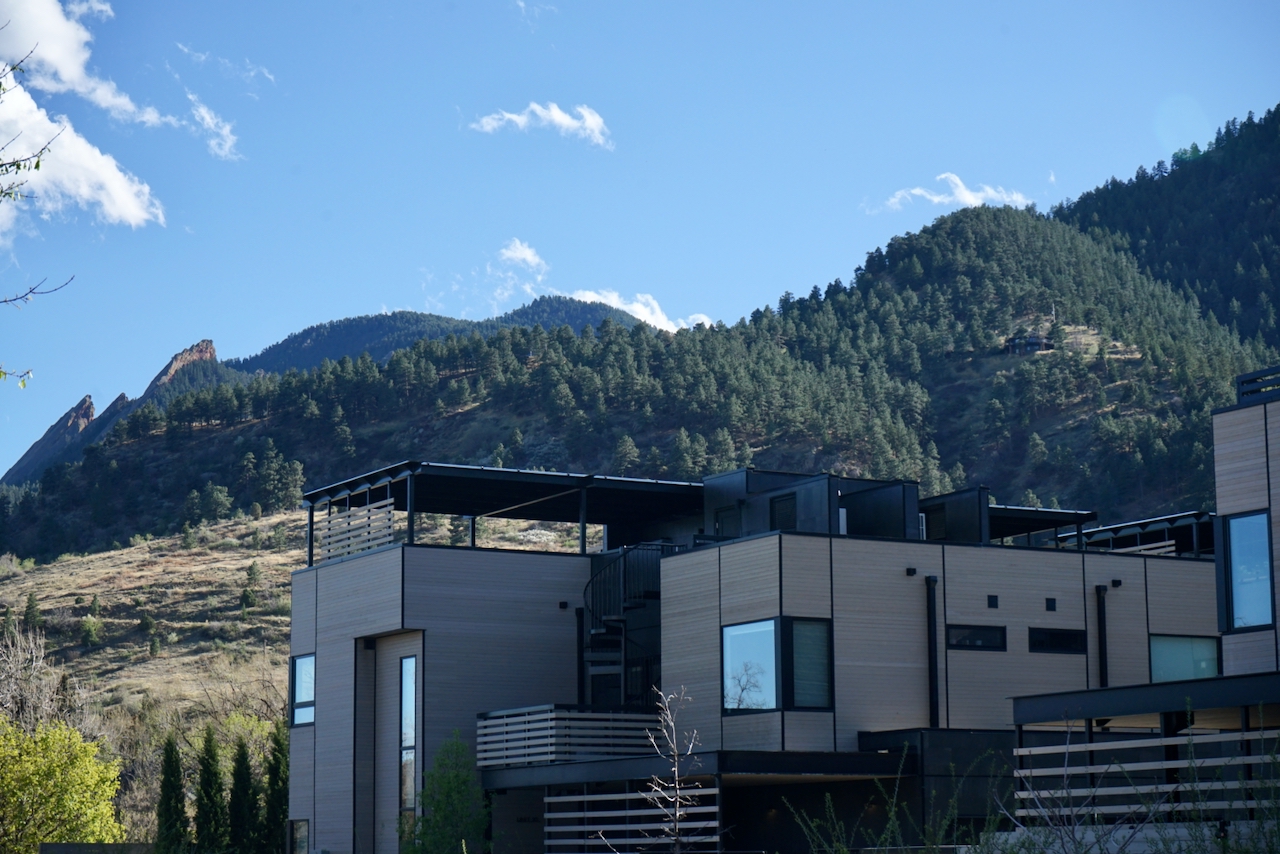
Boulder group drops vacancy tax that included commercial spaces as council eyes homes-only version
Organizers behind a ballot measure to tax empty homes and commercial spaces announced this week that they plan to drop their petition, citing a commitment from members of the Boulder City Council to refer a similar measure to the ballot this November.
Read more Half of staff at Boulder’s NOAA Global Monitoring Lab face furloughs as funding freeze drags on
“We plan to follow Council’s actions closely as they work to get this measure in front of voters this year, and we will be suspending our campaign once we are satisfied that the housing measure has formally advanced,” Doug Hamilton, chair of the Vacancy to Vitality campaign, said in a news release.
Under the proposed Vacancy to Vitality measure, property owners would pay an annual tax if their residential or commercial space sits vacant for more than half the year. Vacant dwelling units would be taxed at $7,000 per year and commercial properties would be taxed on a sliding scale.
The Boulder City Council has been considering a vacancy tax, though one that would likely exclude commercial properties. A recent proposal by city officials would impose a $2,000 annual tax on vacant homes, generating an estimated $1 million to $2 million per year.
The decision to pull the resident-led measure means business owners are unlikely to be impacted by the new tax. Organizers said they heard from businesses that supported their version because it could push owners of vacant spaces to fill them and drive more foot traffic downtown. But the Boulder Chamber was expected to oppose it.
Read more Boulder’s powerlines pose wildfire risk. Why are so many still above ground?
“The research is clear: commercial vacancy suppresses small business growth and erodes the sales tax revenue our city depends on,” Jill Grano, spokesperson for Vacancy to Vitality and former member of the Boulder City Council, said in a statement. “We’re giving the city room to develop its own approach and will keep working with stakeholders on other tools.”
No members of the Boulder City Council had publicly endorsed the resident-led measure, and the campaign did not list any major endorsements on its website. Vacancy to Vitality needed 3,418 signatures by May 27 to qualify for the ballot. Organizers said they were collecting paper and online signatures, though fewer than 200 people had signed the online petition since it launched last month.
City officials have estimated that as many as 4,000 of Boulder’s roughly 48,000 housing units are vacant, according to a May 2024 memo, though more recent estimates based on water usage data are much lower. In the city’s downtown, about 30% of offices are vacant.
Read more Boulder’s water supply hangs on for now amid historic drought conditions