Boulder must roughly double emissions-cutting pace to reach 2030 climate goal
Boulder’s updated Climate Action Plan offers the city’s latest roadmap for reaching its ambitious climate goals. But the latest emissions data shows the city will have to move much faster to get there.
Read more ☀️ Your guide to Fourth of July weekend in Boulder
Boulder has reduced greenhouse gas emissions by about 5% annually since 2018, but the city would need to roughly double that pace to reach its goal of cutting emissions 70% below 2018 levels by 2030, Kate Galbo, the city’s senior sustainability analyst, said.
The updated plan does not introduce sweeping new policies. Instead, it brings together the city’s climate strategies into a single roadmap for the first time since 2021 while highlighting where additional emissions reductions are needed.
The plan adds new local climate projections and, for the first time, a second way of measuring emissions that captures the carbon footprint of what Boulder residents buy and consume, even when those emissions occur outside city limits.
It also places greater emphasis on ensuring climate investments benefit mobile home residents, low-income households, immigrants and renters, who are disproportionately vulnerable to heat, wildfire smoke, floods and other climate impacts.
“It’s going to require a lot of innovative, strategic thinking,” Galbo said.
Boulder’s traditional greenhouse gas inventory, which counts emissions generated within city limits, totals about 1.17 million metric tons annually, roughly half the city’s 2005 level. About two-thirds come from buildings, about one-third from transportation and about 1% from waste.
The city aims to reduce emissions 70% below 2018 levels by 2030, reach net-zero emissions by 2035 and become carbon-positive by 2040. Galbo said the targets were intentionally set to reflect what climate science says is needed to limit the worst impacts of climate change.
“They’re not based on what we think we will achieve, but what we feel like we should achieve,” she said.
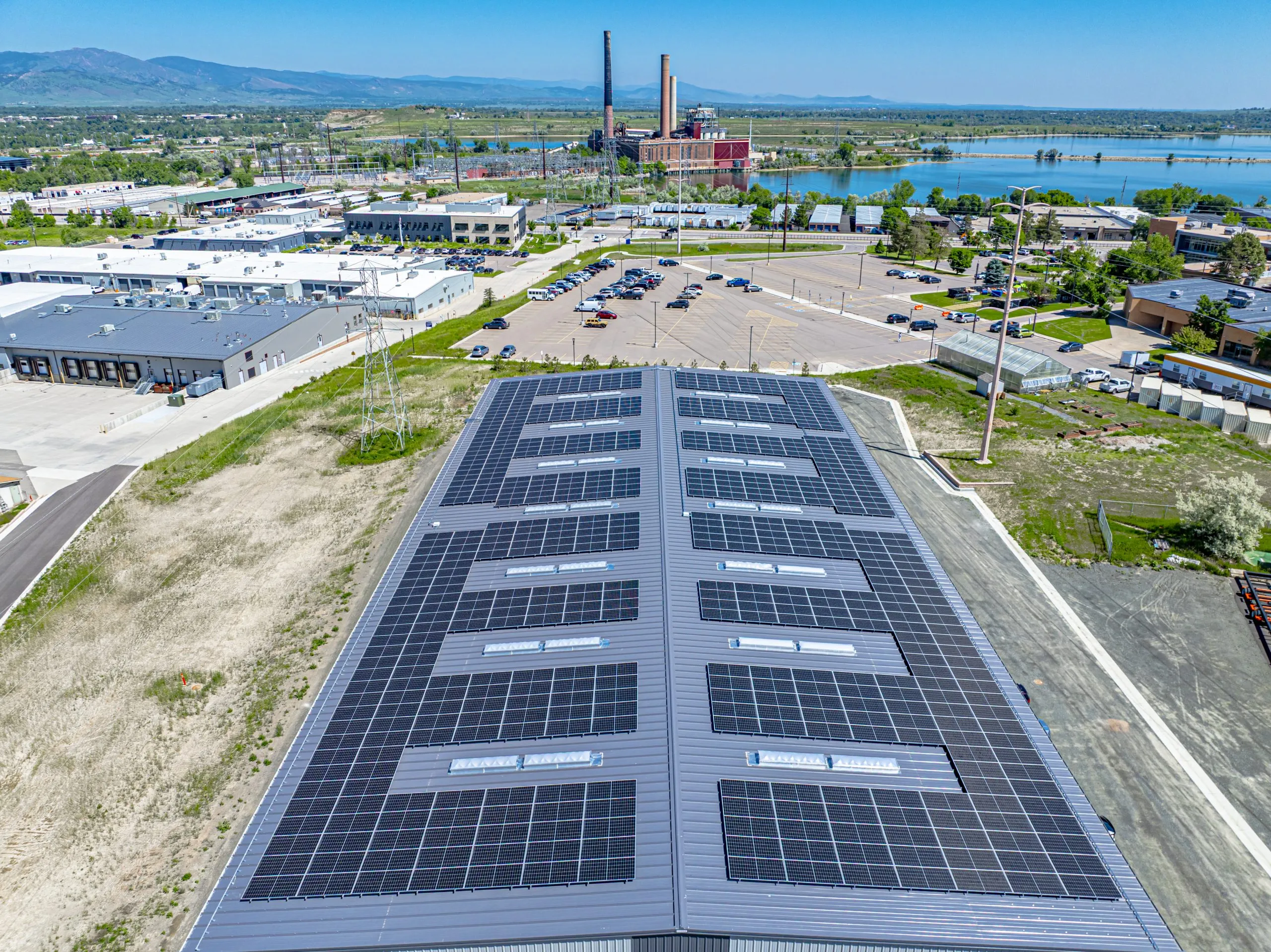
The city has made progress in some areas. It surpassed its original target of generating 105 megawatts of local renewable energy seven years ahead of schedule, prompting the city to raise its 2030 goal to 145 megawatts. Most of that power comes from rooftop solar and the city’s hydroelectric facilities.
The plan also includes updated projections for how climate change is expected to affect Boulder, including nearly 30 days each year above 95 degrees by 2030, nearly triple the number of drought days, longer wildfire seasons and more frequent heavy precipitation events.
Galbo said those projections, developed in 2023, may already underestimate the pace of warming.
“It seems like we’ve been kind of accelerating a bit faster than expected, especially around the heat metrics,” she said.
Read more Hotel Boulderado workers launch union drive, citing layoffs and cuts under new ownership
The carbon footprint of Boulder households
For the first time, Boulder measured consumption-based emissions, which estimate the carbon footprint of everything residents buy and consume, regardless of where those emissions occur. The new analysis includes emissions associated with food production, manufacturing, air travel and other purchases, unlike the city’s traditional inventory, which measures only emissions produced within Boulder.
Under the consumption-based inventory, the average Boulder household generates about 38 metric tons of greenhouse gas emissions annually. That’s below the national average of 48 metric tons, largely because residents produce fewer emissions from driving and electricity use.
Across all Boulder households, that adds up to an estimated 1.6 million metric tons of greenhouse gas emissions in 2021. Combined, the two measures estimate Boulder is responsible for about 2.7 million metric tons of greenhouse gas emissions annually, more than double the traditional inventory alone.
Transportation accounted for the largest share of consumption-based emissions, followed by food and services.
Galbo said the new inventory is intended less as a scorecard for individual residents than as a planning tool for the city. It can help officials identify opportunities to reduce emissions by expanding reuse programs, cutting waste and making lower-carbon choices easier, she said.
Because electricity generation is one of the largest drivers of local emissions, much of the city’s progress depends on Xcel Energy’s transition to cleaner energy.
Under the franchise agreement approved in 2020, Xcel committed to a series of emissions milestones. The utility has missed interim targets in 2022 and 2024, prompting concerns from city council.
Carolyn Elam, the city’s senior sustainability manager who oversees the city’s partnership with Xcel, said she remains optimistic the utility can still meet its 2030 commitments despite delays tied to pandemic-era supply chain disruptions.
“I would describe this as more about timing rather than an indicator that they are off course,” Elam said.
Xcel has several emissions-reduction projects planned through 2028, including a heat pump project at Shanahan Ridge, electrification work on Pearl Street and expanded clean energy programs for residents.
Although a proposed virtual power plant lost a $12.7 million federal grant after it was canceled by the Trump administration, Elam said a new Colorado law requiring utilities to develop virtual power plant programs could provide another path forward.

Related Posts
Boulder’s climate lawsuit reaches Supreme Court, with cases nationwide at stake
Boulder County’s wildfire risk eased after summer rain. Fall winds and drought remain concerns.