Boulder residents weigh reviving the Boulder County NAACP after a year of turmoil
A year after the Boulder County NAACP effectively ceased operating amid a bitter conflict with its national organization, residents gathered Friday to begin exploring how the civil rights group might return.
Read more 🎨 What happened to a downtown Boulder art experiment + 40 things to do
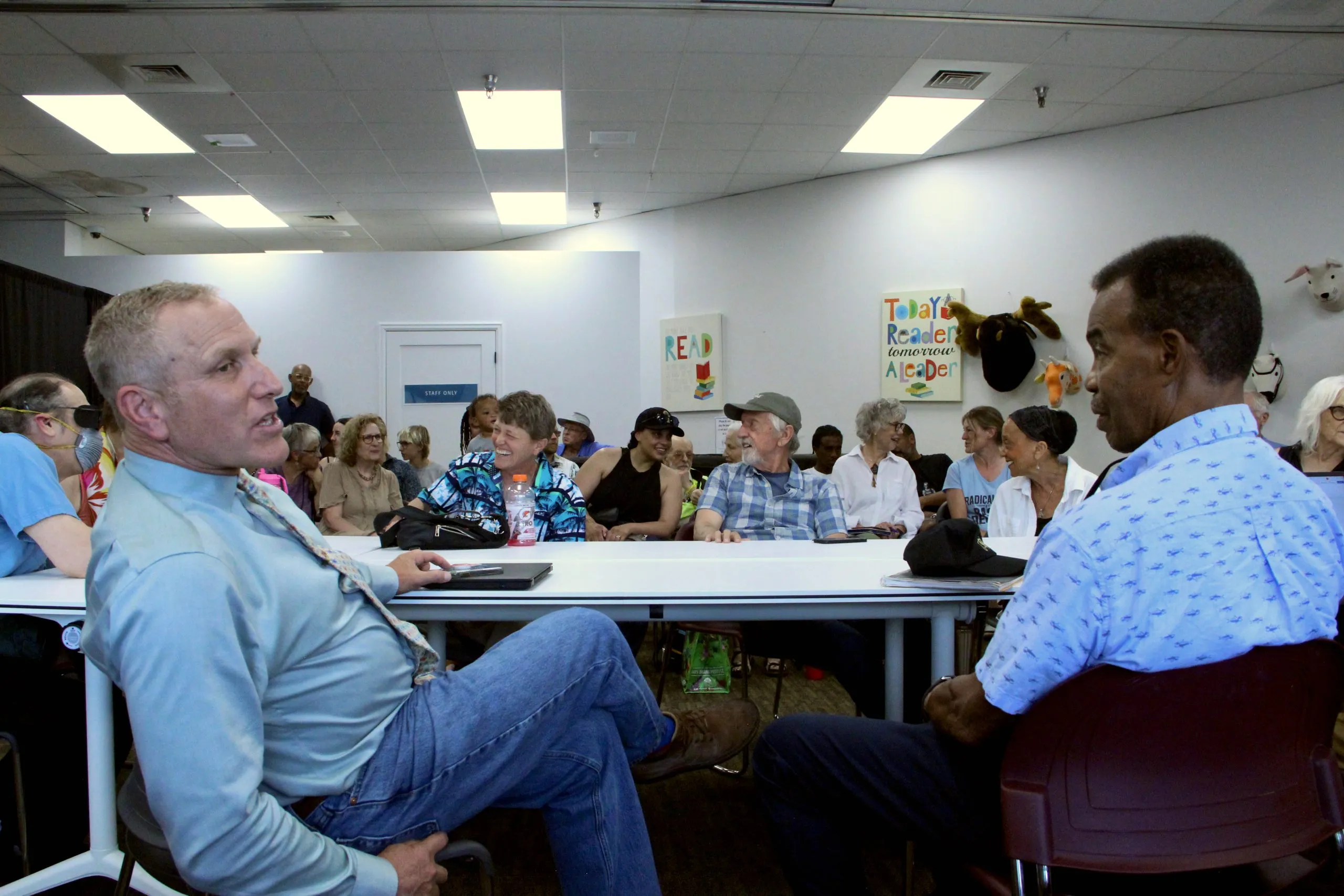
The meeting marked the first organized effort in more than a year to revive the chapter after an internal dispute divided members and led to a federal lawsuit. While attendees overwhelmingly supported restoring a local NAACP presence, state leaders cautioned that major legal and organizational questions remain unresolved.
The meeting, organized by NAACP member Kenneth Flowe, drew about 90 people, including City of Boulder Police Chief Steve Redfearn and Boulder Chamber President John Tayer. None of the former executive committee members at the center of the branch’s dissolution and the ensuing lawsuit appeared to be at Friday’s meeting.
In 2025, the Boulder branch’s 13-member executive committee voted to dissolve the organization, saying the move was a protest against what members described as retaliation and pressure from city officials following their criticism of Boulder leadership. The city denied those allegations, and the national NAACP said local branches lack the authority to dissolve themselves.
The national NAACP later sued the former executive committee members, alleging they dissolved the branch without authorization, attempted to liquidate more than $100,000 in assets, and improperly used donor and membership lists to spread misleading information. The former leaders deny the allegations and are seeking to dismiss the lawsuit.
Addressing the group by Zoom, Omar Montgomery, president of the Rocky Mountain State Conference of the NAACP, said that Friday’s meeting was only the first step in what could be a lengthy process.
“This is still in the exploratory phase,” Montgomery told attendees. While national leaders are encouraged by the community’s interest, he said, “We still need confirmation from national that this is the direction that they want to go in.”
Montgomery said key questions remain unresolved, including whether the Boulder branch can be reactivated under its existing name and membership or whether a new branch must be created. It’s also unclear how many members belonged to the former branch or whether those memberships can be transferred.
Montgomery said it’s also unclear whether Boulder residents will have to wait until the litigation concludes before reactivating the chapter. He expects to have more answers after next week’s national NAACP convention.
Over eight years, the Boulder County NAACP grew into a driving force behind several of the city’s most significant civil rights initiatives. The branch helped establish Boulder’s Police Oversight Panel after an officer drew his gun on Zayd Atkinson, an unarmed Black college student, played a key role in creating CU Boulder’s Center for African and African American Studies, and launched scholarships and cultural programs.
Flowe had hoped to reactivate the branch within the next month so it could award scholarships to graduating high school students before they leave for college, as the Boulder NAACP has traditionally done. Montgomery indicated that timeline would not be possible.
Friday’s gathering was intended primarily to gauge community interest in reviving the chapter. Montgomery said he would report the turnout to national leadership.
He added that rebuilding the Boulder branch is personal to him. As former president of the Aurora NAACP branch, he said he drew heavily on Boulder’s work while helping shape reforms there, including efforts that ultimately led to the establishment of an independent monitor for the police department.
“Guess who I got these ideas from? The guidance was following the blueprint of what took place in the Boulder unit,” he said.
“So it is personal to me that this region has a unit, because I learned and grew from some of the groundwork that you laid.”
Read more 🏕️ Boulder moves homelessness services away from downtown
Montgomery also suggested that any future chapter may take a broader regional approach.
“You may want to consider thinking a little bigger outside of Boulder County, only because there are other areas that are underrepresented,” he said, suggesting a broader Northern Colorado chapter that could also serve communities such as Fort Collins and Greeley, which do not have local NAACP branches.
The previous Boulder branch covered all of Boulder County, though much of its work focused on the city. One attendee argued a revived chapter should place greater emphasis on serving Boulder County as a whole.
“As African Americans and as Black people, our percentage in Boulder County is already very low. So if we stick to just one city within the county, our numbers become even lower,” she said.
According to Flowe, about 80% of the Boulder chapter’s membership was not Black.
The litigation remains ongoing. Former executive committee member Madelyn Strong Woodley said she believes discussions about the chapter’s future would be more productive after the case is resolved.
“There’s success when there’s unity, when we’re all headed in the same direction,” she said. “Right now I don’t get any indication that we’re unified.”
The lawsuit followed months of conflict between the national organization and the Boulder branch’s leadership. Several former leaders were outspoken critics of city officials, particularly over the appointment of Police Chief Redfearn in 2024. Their public campaign led to a complaint from the city manager, an attempt by the executive committee to dissolve the branch, the national NAACP’s suspension of the executive committee members and, ultimately, the lawsuit.
In a June 18 motion to dismiss filed in U.S. District Court, seven of the remaining defendants argued that the national NAACP overstated the amount of money at issue and contended that any remaining assets should go to the state branch, not the national organization, among other arguments.
Five of the original defendants have already been dismissed from the case. Eight defendants remain: Judy Huston, Annett James, Gabriela Kioupakis, Judith Landsman, Darren O’Connor, Lawrence Pevec, Glenda Strong Robinson and Woodley. Kioupakis is represented by separate counsel and did not join the motion to dismiss.
Before the branch ceased operating, it had about 500 members. National officials said only 50 active members are required to maintain a local chapter.
Friday’s turnout suggested there is enough interest to revive the chapter. But roughly half the attendees said they would prefer to wait until former leaders reconcile with the national NAACP before moving forward.
Montgomery said reconciliation could begin after the litigation concludes, though he cautioned it may take longer if emotions remain raw.
“Sometimes it takes people some time to be at that point where they want to reconcile,” he said.
Others argued the community could not afford to wait.
“What’s most important to me today is moving forward,” one attendee said. “We have an organization here that’s needed in Boulder, slash Colorado, period.”
Read more Boulder County DA declines to charge officer in fatal Longmont shooting
“We’re missing this. We’re missing something. That’s why we’re here.”