Measure to expand Boulder County commission from three to five members likely headed to November ballot
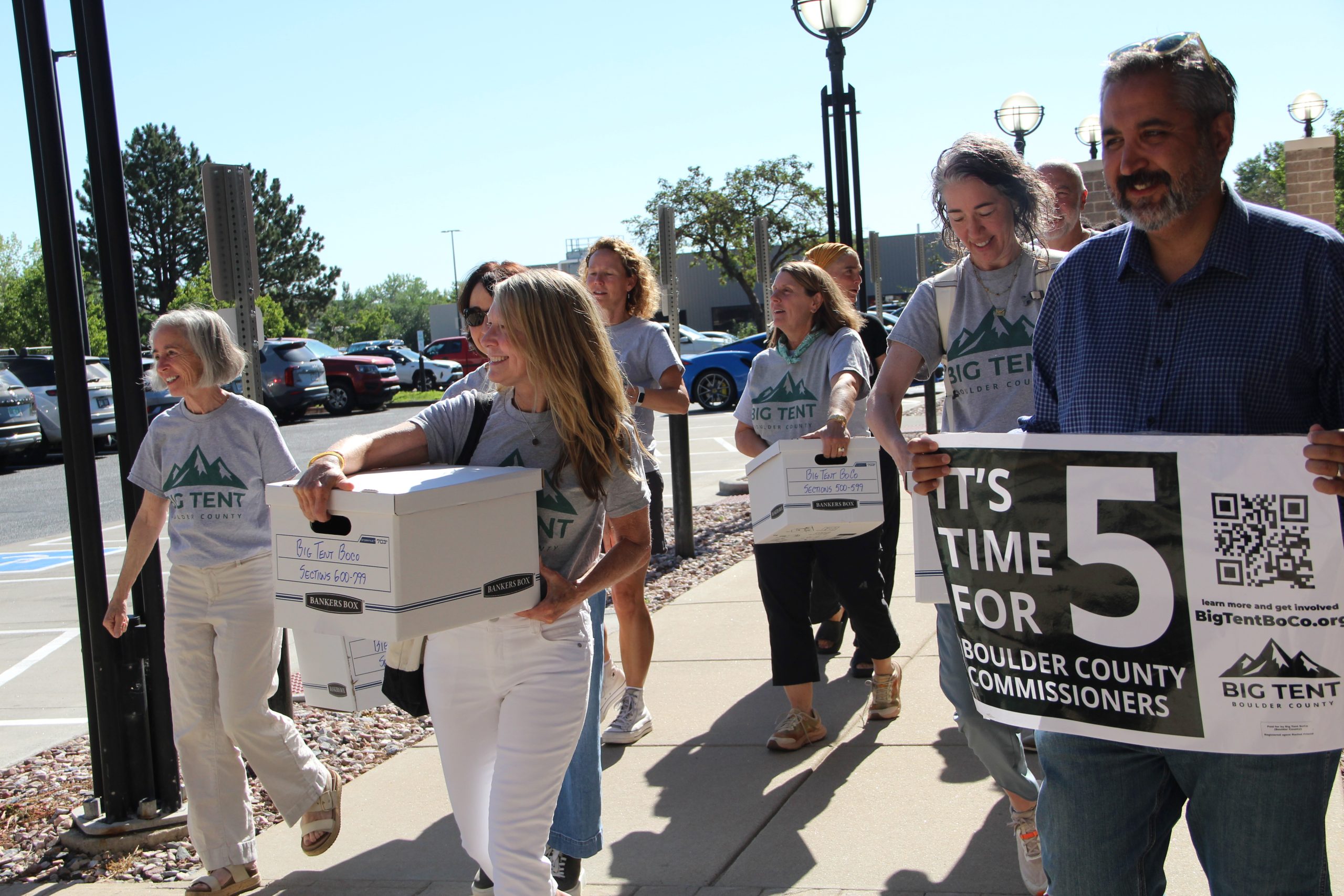
Boulder County voters will likely decide in November whether to expand the county commission from three to five members after supporters submitted more than 18,000 signatures Tuesday to place the measure on the ballot.
Big Tent Boulder County, the group behind the measure, said it turned in 18,422 signatures, well above the 13,064 required to qualify. The county has up to 30 days to verify the petitions before the measure officially appears on the Nov. 3 ballot.
Read more Star Van Lines Movers: Your Partner for Every Kind of Move
The proposal has split the county’s three commissioners. Commissioner Ashley Stolzmann supports the expansion, saying a larger board would give the commission more capacity to respond to constituents.
“There are only three of us for 330,000 people, and people generally expect that you will respond to their emails, that you’ll go to their community events, that you’ll take their phone calls,” Stolzmann told Boulder Reporting Lab. “There really is a capacity issue.”
Commissioners Marta Loachamin and Claire Levy oppose it, arguing more commissioners would slow decision-making and add an estimated $500,000 in costs to the county at a time when the county is trimming $13 million from its budget and laying off staff.
The three commissioners oversee a $745 million county budget. County officials say spending is projected to outpace revenue, creating what they describe as a structural deficit. By comparison, the Boulder City Council has nine members overseeing a $521 million budget.
Terri Brncic, one of the leaders of Big Tent Boulder County and a former candidate for Boulder City Council, said the group had more than 100 volunteers collecting signatures for months. The group also spent about $30,000 on consultants, according to state records. Brncic said the group realized several months in that “it’s nearly impossible to hit that [13,000-plus] number on volunteers alone.”
This would be the first ballot measure to qualify through signature collection in at least nine years, according to the county website. Similar five-commissioner petition efforts were attempted in 1975, 1993 and 2018, but failed to get on the ballot.
The clerk’s office still must validate the submitted signatures. The 13,064 signatures required to qualify for the ballot equals 8% of the votes cast in Boulder County’s 2022 election. Campaigns typically submit thousands more signatures than required because some are invalidated during verification.
“This is a positive day for democracy,” Stolzmann told Big Tent leaders as they dropped off boxes of signatures at the county clerk’s office. “I’m really impressed with you all.”
Big Tent is made up of Boulder elected officials, former elected officials, and community and business leaders who support expanding the commission. Members include state Sen. Judy Amabile, Boulder Progressives co-founder Masyn Moyer, former Longmont Mayor Joan Peck, former Boulder City Councilmember Bob Yates, former Boulder City Councilmember and Democratic county treasurer candidate Rachel Friend, Boulder Mayor Aaron Brockett, and Boulder City Councilmembers Mark Wallach, Tina Marquis, Tara Winer and Rob Kaplan.
Brncic said recent county decisions also drew new volunteers. After commissioners proposed a pilot program that proved unpopular with many cyclists, about 30 people signed up to help collect signatures. Commissioners later dropped the pilot.
However, Brncic said Big Tent is not about current commissioners, but about the way decisions are made.
“Recently, we’ve seen important decisions flip back and forth when a single commissioner changes their mind or one of them misses a meeting,” Yates and Friend wrote in a February opinion piece.
Brncic pointed to the commission’s shifting decisions over herbicide spraying at Red Hill, saying the reversals undermined public confidence. Opponents of the spraying made similar arguments at the time.
Boulder County ballot measures can qualify one of two ways: by being referred by county commissioners or through signature collection. County election officials said state law allows citizen petitions in only a few situations.
“The statute is actually very narrow,” Elections Director Stephanie Gnoza said. “Moving from three to five is one of the few situations.”
Big Tent leaders said they are confident the measure will have support in November, in part because the petition process forced them to do a lot of community engagement.
Read more 🌽 The ultimate 2026 guide to Boulder County’s roadside farm stands
“We’ve literally talked to thousands of community members at this point, and the response has been overwhelmingly positive,” Brncic said.
Opponents cite costs, slower decision-making
Opponents, including Commissioners Levy and Loachamin, as well as former commissioner and current chair of Community Foundation Boulder County Board of Directors Deb Gardner, argued in a recent opinion piece that increasing the size of the county commission is too expensive and would result in less effective decision-making.
They also argued county commissioners primarily make administrative decisions rather than setting policy. Adding two commissioners, they said, would make government less efficient. “We don’t have five governors, five sheriffs or five district attorneys, nor do we run businesses with five CEOs for good reason,” they wrote in the opinion piece.
Other skeptics, including Boulder City Councilmember Nicole Speer, have argued that adding commissioners would not necessarily improve representation, because Democratic primaries often determine the eventual winner.
“Only a fraction of voters participate in primaries, and those who do tend to be the ones most connected to political networks,” she and Celeste Landry wrote in an opinion piece. Commissioner Loachamin has made the same critique, saying unaffiliated candidates and those outside established political networks face steep odds, regardless of how many seats are available.
Speer and Landry, who has long advocated for proportional representation in elections, proposed a companion measure that would establish proportional representation. Under such a system, seats are allocated based on the share of votes a group of candidates receives, rather than winner-take-all.
Yates said Big Tent is not opposed to proportional representation.
“We’re just trying to keep it simple,” he said. “We’re just trying to get our county to five. If someone wants to add ranked choice voting, fine. We’re not going to wait around.”
Possible voting structures
Colorado law allows counties with populations of at least 70,000 to expand from three to five commissioners. Five counties have five commissioners: Pitkin, Weld, El Paso, Arapahoe and Adams. Douglas County organizers are also pushing to put the question on the November ballot.
Currently, the county is divided into three districts. Each commissioner lives in a different district, but is elected at-large, with all voters countywide casting ballots for each seat.
If voters approve the measure, commissioners could be elected in one of two ways:
- Five-district model: Five new districts would be drawn, and commissioners would be elected only by voters in their district.
- 3+2 model: Three commissioners would be elected only by voters in their district, and two commissioners would be elected at-large by the entire county.
If the petitions are verified, voters will choose between the two models on the 2026 ballot. So far, Big Tent is declining to support one model over the other.
Opponents of the ballot measure argue that it will not expand geographic representation. Because voters in Boulder and Longmont make up about two-thirds of the county population, opponents say voters there would likely decide a majority of seats.
However, proponents argue any increase in district-based voting will distribute power better across the county than the current system. In smaller districts, candidates would campaign to fewer people, closer to their own community.
“I am hopeful that, in whatever form, it really starts to get some of these smaller communities that have been historically overlooked engaged,” Brncic said.
Read more Moving Help for Any Situation
