As Boulder’s power grid falters, Xcel begins major undergrounding projects
This story is part of a series, Rewiring Boulder, examining local solutions for a power grid under pressure from wildfire and climate change. The first story explored why so many of Boulder’s powerlines remain above ground more than 50 years after the city began undergrounding them.
Read more 🔎 Boulder police are closing complaints before independent review
Xcel Energy is moving forward with several major undergrounding and grid-hardening projects around Boulder, including burying a powerline near the city’s wastewater treatment plant and advancing plans to move 5.5 miles of line underground along U.S. 36 toward Lyons.
The projects are intended to reduce wildfire risk, protect critical infrastructure and limit the reach of future power shutoffs. Work along 75th Street began in June, while Xcel is acquiring easements and permits for the U.S. 36 project. Undergrounding work in Chautauqua that began last summer is nearly complete.
The work comes as Boulder confronts a sharp deterioration in electric reliability. In 2024, city residents experienced nearly twice as much downtime as Xcel customers statewide. Some neighborhoods now experience more than a dozen outages a year.
The outages have contributed to a growing recognition that Boulder’s electric grid, much of it built for a different era and climate, is no longer keeping up. After decades of piecemeal undergrounding, the city is now developing a long-term roadmap to make the power system more resilient.
The plan could call for accelerated undergrounding, neighborhood microgrids, battery storage and backup power for critical facilities. The Boulder City Council is expected to identify its priorities by the end of the year.
“We’ve experienced a huge shift in both frequency and impact of power outages,” Jonathan Koehn, Boulder’s director of climate initiatives, told council in April. “I think most of our community is feeling it directly.”
Xcel’s next projects
Xcel’s projects address several weak points in Boulder’s power system: lines that pass through wildfire-prone corridors, infrastructure needed to keep essential facilities operating and aging equipment that has contributed to repeated outages.
The project along 75th Street will bury a line that serves Boulder’s wastewater treatment plant and passes through heavily vegetated areas near Jay Road. The work is intended to reduce the risk of a fire igniting and spreading toward Erie and Lafayette while preserving power to the treatment plant during shutoffs. Construction began in June.
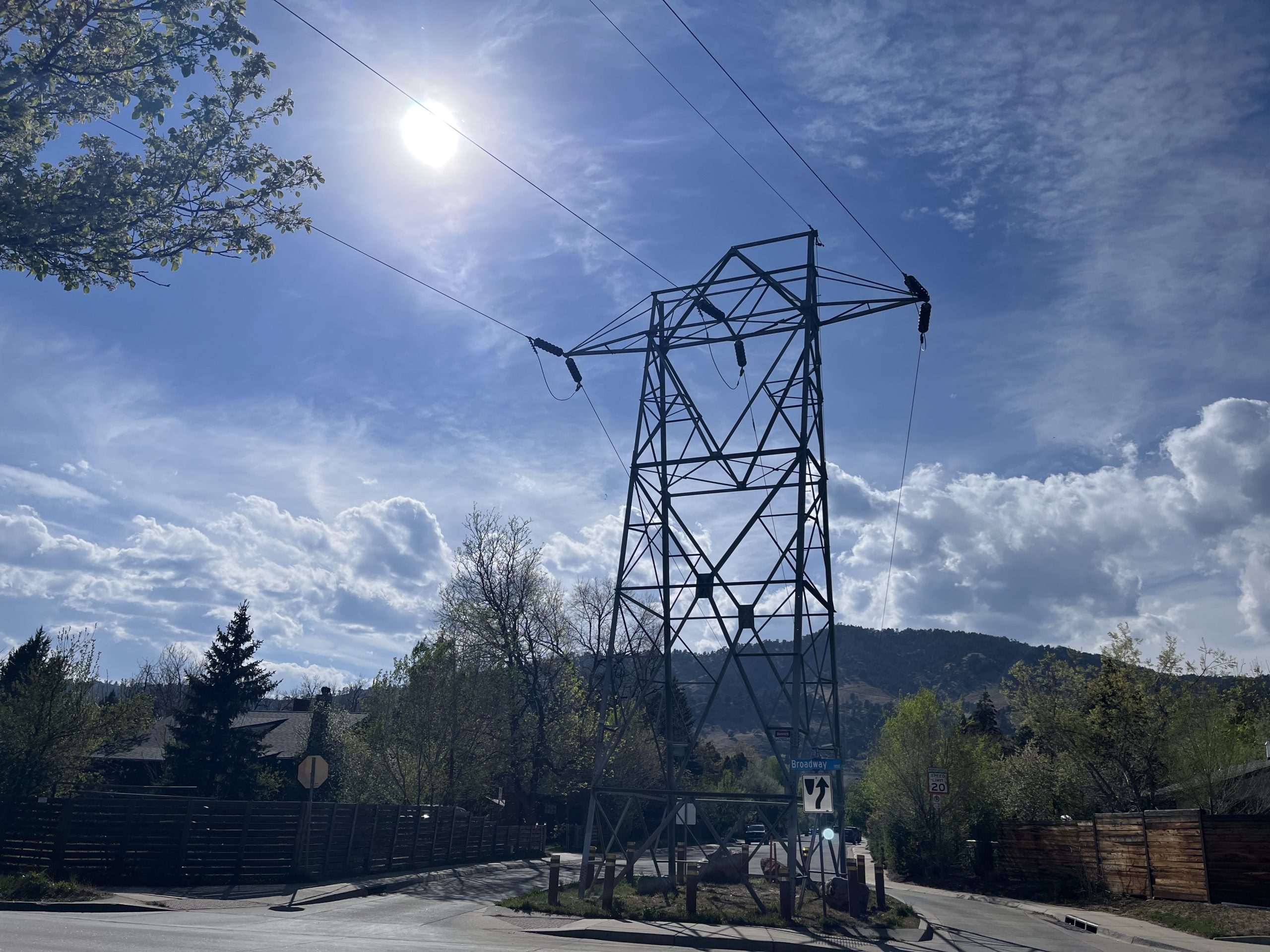
Xcel also plans to bury about 5.5 miles of line along U.S. 36 toward Lyons. Although much of the line lies outside city limits, it affects service to North Broadway and nearby Boulder neighborhoods. Burying it is intended to reduce both the risk of wildfire ignition and the number of city residents who lose electricity during preventive shutoffs.
The project requires permits from Boulder County and the Colorado Department of Transportation. The first phase will tackle overhead lines between Jay Road and Broadway, with construction expected to begin this fall.
Carolyn Elam, Boulder’s senior sustainability manager, said she believes the line was involved in the 2009 Olde Stage Fire, which was started by an energized powerline that fell and burned roughly 3,000 acres.
Not every line can be buried. In mountainous areas, steep slopes and rock can make undergrounding impractical. Xcel instead plans to rebuild parts of the system with stronger poles and upgraded equipment designed to withstand high winds and wildfire conditions. One such project is planned for the Betasso area.
Other projects are focused primarily on replacing aging infrastructure and improving reliability. Xcel is replacing an aging transmission line between Sunshine Canyon and Boulder Canyon drives. City officials say the line has contributed to more frequent outages and is particularly vulnerable during periods of high summer electricity demand. City council approved the project in February.
Xcel also plans to replace an aging underground line serving the Shanahan Ridge 2 subdivision and is seeking a land-use agreement with the city before beginning the work.
The projects are part of Xcel’s $2 billion wildfire mitigation plan, which state regulators approved in 2025.
A grid built over generations
Boulder’s electrical system grew incrementally as neighborhoods expanded and development spread across the city.
The backbone of the system is a large transmission line, visible along Grape Avenue, that connects major substations around Boulder. Those substations feed about 30 smaller distribution circuits that deliver electricity to homes and businesses.
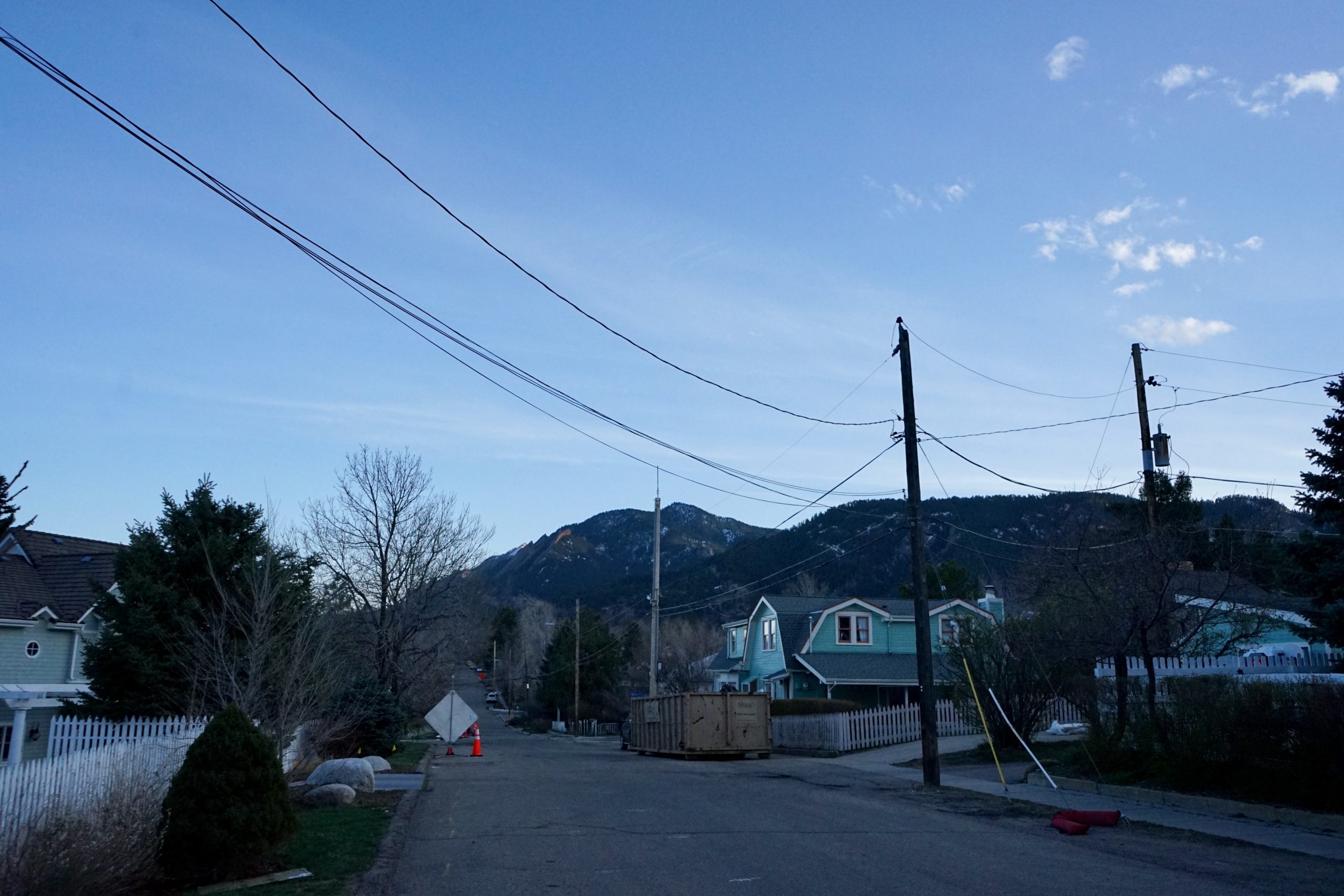
As Boulder grew, new lines were layered onto older ones, creating a complicated patchwork system in which neighboring homes can receive electricity from entirely different circuits. That helps explain why one neighborhood may lose power while a nearby block remains unaffected.
Read more 28 Boulder County farm stands worth a summer road trip
Boulder’s vulnerability also extends beyond its borders. Lines serving city residents pass through the foothills and mountain corridors west of Boulder, where much of the electrical system remains above ground and wildfire risk is particularly high. Because parts of the grid are not divided into smaller, independently controlled sections, Xcel sometimes must cut power to more customers than necessary to de-energize a high-risk line.
Within the city itself, about 140 of Boulder’s roughly 490 miles of power lines remain overhead, according to city electrical engineer Lex Telischak.
The first story in this series examined how a funding system created in 1970 failed to generate enough money to bury all of the city’s lines. For years, the slow pace of undergrounding was largely accepted. But climate change has altered the stakes.
Boulder has always experienced intense windstorms, especially in winter. Historically, snow and moisture reduced the likelihood that downed lines would spark fast-moving fires. Increasingly dry winters have weakened that natural buffer.
Utilities across the West have faced mounting scrutiny over their role in starting wildfires. Investigators found that the2021 Marshall Fire was caused in part by an unmoored Xcel powerline. Xcel subsequently began using public safety power shutoffs, intentionally cutting electricity during periods of extreme fire danger to prevent ignitions. Boulder has experienced four such shutoffs since 2024.
Wildfire-prevention shutoffs are not the grid’s only problem. Some underground lines installed in the 1970s and 1980s are nearing the end of their useful lives, while population growth and increased electrification are increasing demand.
The reliability gap is stark. In 2024, Boulder customers experienced nearly twice as much downtime as Xcel customers statewide, 630 minutes on average compared with roughly 350. The contrast was even greater with the municipal utilities in Longmont and Fort Collins, where customers lost power for an average of just 19 and 11 minutes, respectively.
A broader resilience strategy
City leaders say improving reliability will require more than burying powerlines.
At the current pace, undergrounding Boulder’s remaining overhead lines could take roughly 70 years. Officials also caution that undergrounding is not a cure-all. Buried lines are generally more reliable and pose significantly less wildfire risk, but outages can be harder to locate and repair when they occur.
City staff presented the council with a preliminary power resilience roadmap in April. Some strategies, such as emergency hubs and backup power for city facilities, are within Boulder’s control. Others, including accelerated undergrounding and changes to the grid, would require cooperation from Xcel or approval from state regulators.
The potential strategies include:
- Expanding distributed energy resources, including battery storage and neighborhood microgrids, and offering incentives for their installation.
- Creating community resource hubs during outages, improving support for residents who depend on electric medical equipment and expanding emergency-preparedness education.
- Accelerating undergrounding, replacing aging equipment and dividing the grid into smaller sections to limit the reach of outages.
- Establishing backup power systems for critical facilities.
- Pursuing policy changes to strengthen utility accountability and reliability.
The final roadmap will also identify potential funding sources. Those could include sales or property taxes, an increase in Xcel’s franchise fee, neighborhood improvement districts, utility grants and the reallocation of city money and staff.
The timeline will vary considerably. Some measures could reduce the effects of outages within a few years. Rebuilding substations and completing major infrastructure projects could take a decade.
“That doesn’t mean we won’t see material improvements fairly quickly,” Elam said.
Xcel’s current projects, for example, could substantially reduce or even eliminate the effects of wildfire-prevention shutoffs in some areas by 2028, she said.
Public engagement is expected to begin this summer. The city plans to focus particularly on people who are most vulnerable during outages, including mobile home residents, people who rely on electric medical equipment and small business owners. Boulder also launched a pilot program in July to help nonprofits obtain backup battery systems and prepare for outages.
The council is expected to identify its priorities by the end of the year, but there is not enough time to enact a major policy proposal in 2026, Elam said. Decisions about how aggressively Boulder strengthens its grid, and how it pays for that work, will fall to a future council.
Read more Boulder police are closing complaints against officers before independent review