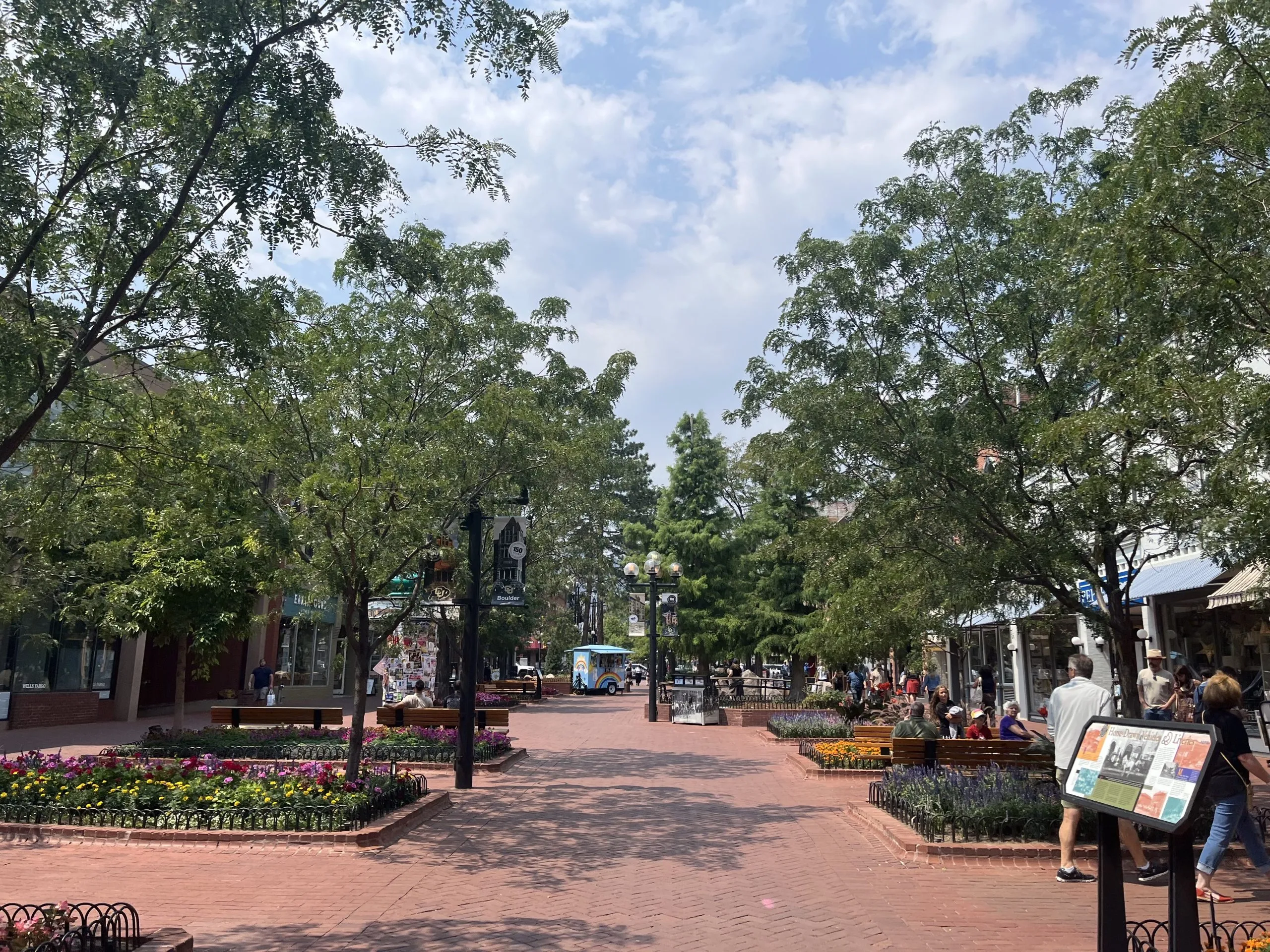
Boulder envisioned an all-electric Pearl Street Mall. That plan is shrinking.
Xcel Energy has begun auditing buildings along the Pearl Street Mall, the first step in a revised plan to retire an aging, high-risk natural gas line beneath the heart of downtown Boulder.
Read more 🚜 Could tiny homes be coming to Boulder County farms?
The project was intended to address two problems: the safety risks posed by the deteriorating gas line and Boulder’s reliance on fossil fuels. Replacing the line could cost millions of dollars and commit Boulder to decades of continued natural gas infrastructure. Switching buildings from gas to electricity is central to meeting the city’s climate goals.
But the project’s electrification ambitions have narrowed since Xcel and the city unveiled the original proposal in 2024. That plan called for converting all 66 buildings thought to be served by the deteriorating line to electricity, including restaurants with commercial kitchens.
Xcel now says only about 24 buildings are directly connected to the line it plans to retire. The owners and tenants of those buildings will be offered help to electrify, but they will not be required to do so. Those who want to keep natural gas can instead be served by another existing line behind the buildings.
Each affected building and tenant must undergo an energy audit, according to Xcel spokesperson Michelle Aguayo. The process began in March and will determine what electrical upgrades and replacement equipment each property would need. Xcel hopes to complete the audits by the end of the year.
Businesses in the project area can also request free audits that include a tailored electrification plan, an estimate of potential savings and rebates, an assessment of which gas-powered equipment could be replaced and a review of utility bills.
Replacing the line, rather than retiring it, would require tearing up much of the pedestrian mall between 11th and 15th streets, disrupting access to one of Boulder’s busiest shopping and restaurant districts just as the city prepares to host the Sundance Film Festival beginning in January 2027.
Xcel previously estimated that replacing the line would cost about $7.5 million. Upgrading the electric grid to support full electrification was projected to cost between $3.7 million and $4.5 million. Those estimates did not include the cost of replacing gas-powered equipment inside the buildings, including heating systems, water heaters and restaurant stoves.
Xcel had also explored building a replacement gas line in the alleys adjoining the mall. But those spaces are already crowded with water, sewer and electric infrastructure. In a 2023 regulatory filing, the utility said construction there would be “incredibly difficult and expensive.” Many Pearl Street buildings also have indoor gas meters that would have to be replaced with modern outdoor meters.
Aguayo said customers who choose to continue using natural gas could instead be served by the existing alternate gas line. The revised strategy offers more flexibility than the original proposal, which would have required every affected building and tenant to replace gas-powered equipment with electric alternatives, including heat pumps, heat-pump water heaters and induction stoves.
Although customers can keep using natural gas for now, some larger building owners may eventually have to reduce their properties’ emissions under state and local regulations. State rules adopted in 2021 require buildings larger than 50,000 square feet to cut greenhouse gas emissions to 20% below 2021 levels by 2030. Several Pearl Street buildings are covered by the rules.
Xcel also faces a state mandate to reduce greenhouse gas emissions from its natural gas system to 22% below 2015 levels by 2030. The utility previously suggested that the Pearl Street project could serve as a test case for similar electrification efforts elsewhere in Colorado.
According to Carolyn Elam, the city’s senior sustainability manager, the Pearl Street area accounts for about 0.4% of Boulder’s natural gas use.
Beyond Pearl Street, the city is pursuing a broader effort to reduce natural gas consumption. City officials have encouraged all-electric construction for years, and in December 2024, Boulder updated its building code to require new buildings to be fully electric.
“As a result, despite housing growth, we have not seen growth in natural gas consumption,” Elam said.
To accelerate the transition away from fossil fuels, the city has developed a 10-year roadmap of policies and programs intended to make buildings healthier and more resilient. City officials say the effort will prioritize renters, older homes and low-income households. One proposed strategy is to update the city’s Boulder Building Performance Ordinance to accelerate electrification and increase energy conservation.
The city and county also offer incentives, education and technical support through EnergySmart and Partners for a Clean Environment, known as PACE. In 2025, the programs provided rebates for 305 air-source heat pumps, 68 heat-pump water heaters and 49 induction cooktops. The city is also working with Xcel to identify electrification opportunities beyond Pearl Street.
Read more Boulder County farms struggle to keep workers. Could tiny homes help?

Related Posts
Boulder’s climate lawsuit reaches Supreme Court, with cases nationwide at stake
Boulder County’s wildfire risk eased after summer rain. Fall winds and drought remain concerns.