How Boulder’s Alpine-Balsam project grew to $366 million and became an election flashpoint
Boulder paid $40 million for an old hospital in 2015. A decade later, the projected cost of turning the site into city offices, housing and flood protection is $366 million with interest. The project, known as Alpine-Balsam, has become a flashpoint in this fall’s election.
Read more 🏫 Judge weighs lawsuit over BVSD school closures
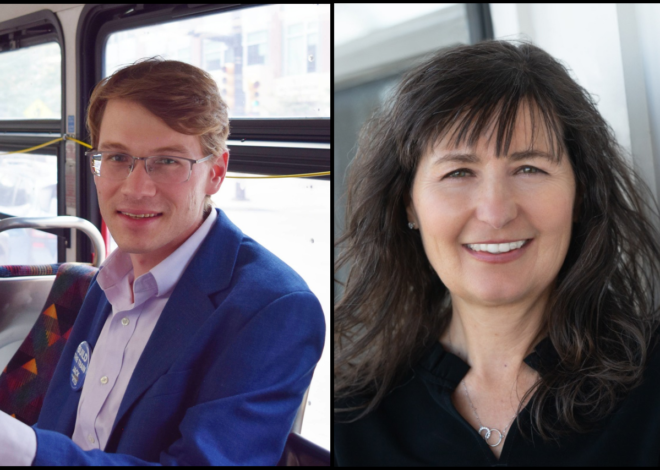
Challengers say it reflects poor financial judgment by incumbent city leaders, calling it “Brockett’s Ballroom” and a “cautionary tale.” Mayor Aaron Brockett calls it “a smart decision for the long-term future of the city.”
According to city records, Alpine-Balsam is expected to cost about $258 million, plus another $108 million in projected interest on debt. The $258 million includes the original property purchase, city offices, flood protection, parking, deconstruction and affordable housing.
The debate comes at a consequential moment for Boulder’s finances. City council has placed a $400 million bond measure on the ballot to maintain and replace other aging city buildings. The bond would not fund Alpine-Balsam, but some candidates and campaign groups have cited the project’s rising costs as a reason to oppose it.
Open Boulder, a political group, recently bought a Facebook ad about the project that reads, “Is anyone paying attention? It’s time for a new direction.” Aquiles La Grave, a first-time candidate challenging Brockett, coined the “Brockett’s Ballroom” nickname, a reference to President Trump’s luxury White House ballroom.
“I just look at Alpine-Balsam as a cautionary tale,” council candidate Ryan Jamieson said during a forum on Sept. 2.
City officials, meanwhile, say the project is on track to come in at or below the budgets council approved for its individual phases, even as the overall estimated cost has grown substantially since early planning. They also say consolidating city operations will save money over the long term.
The city plans to move out of at least 10 buildings, shrinking the total square footage it has to maintain and eliminating a combined backlog of about $12 million in deferred maintenance. City officials estimate those buildings cost about $1 million per year to operate and maintain. They also expect to generate tens of millions of dollars by selling some of the properties and a portion of the Alpine-Balsam site for market-rate housing.
“The dollar figures we’re looking at right now are numbers that give people pause,” Brockett told Boulder Reporting Lab. “While the price for this new building is not cheap, it will last for many decades and it will produce … substantial savings for the city over our current situation over the decades to come.”
A review of the project’s history and city records reveals a complicated picture of how Alpine-Balsam grew into one of Boulder’s largest public investments.
The city bought the Boulder Community Hospital campus, near the Ideal Broadway Shops, with plans to potentially consolidate scattered city offices. Since then, the project’s scope and costs have grown substantially, driven by inflation, the pandemic and decisions by successive city councils with different priorities for the site.
Many of those decisions reflected Boulder’s longstanding goals, including sustainability, affordable housing and flood protection. The city’s new offices will reuse part of the old hospital instead of requiring entirely new buildings. Much of the hospital was taken apart to salvage and recycle materials rather than sending them to a landfill. The flood channel doubles as a park with trees, paths and benches. And the site will include the city’s largest affordable housing development to date, with about 150 permanently affordable apartments and additional market-rate units, according to planning documents.
But achieving those goals also added costs. A recent cost breakdown released by the city shows where much of the money is going.
The largest expense is the $117 million in construction costs for the renovation of the former hospital’s Medical Office Pavilion. Other major costs include about $19 million for deconstruction, $18 million for flood protection and site infrastructure, and $14.5 million to help build affordable housing. Some infrastructure costs serve both the housing development and city offices.
The city expects to finish the pavilion in late 2027. Construction on the first housing units is expected to begin next year, according to city officials.
Early doubts, expanding ambitions
The city’s first major challenge after buying the property was deciding what to do with the former hospital buildings.
It chose a “sustainable deconstruction” plan that salvaged structural steel, copper and fixtures to keep them out of landfills, while preserving the concrete structures of the Medical Office Pavilion and the Brenton Building for city offices.
As estimated deconstruction costs rose to about $16 million, up from early estimates of about $7 million, several councilmembers began to question whether to proceed. Some suggested the city cut its losses and sell the property.
“As we continue to go down this path, we’re digging a hole that we are not going to get out of,” then-Councilmember Lisa Morzel said at an April 9, 2019, meeting. “It is far more than I think any of us anticipated and I think we call it good and get out and try to sell that property.”
The next month, city staff presented an analysis of the potential long-term savings from consolidating city offices, including moving out of a leased building. Staff said keeping the land would give the city more control over the site’s housing density and affordability. On May 16, 2019, council directed staff to move forward with deconstruction.
That October, council adopted the Alpine-Balsam Area Plan, which envisioned a “neighborhood center” rather than just city offices. The plan called for city offices in the renovated medical pavilion, a flood channel along Balsam Avenue that would double as a greenway connecting North Boulder Park to the site, and permanently affordable and market-rate housing.
Read more Scott Skinner-Thompson: Colorado shed its ‘Hate State’ reputation. Will voters bring it back?
Shortly after the city hired a deconstruction contractor, the Covid-19 pandemic hit, according to Michele Crane, the city’s deputy facilities director.
Work began in late 2020 under social distancing rules, forcing the city to reduce the size of the deconstruction crew and slow the work, Crane said. Rising fuel prices also drove up the cost of hauling materials, she said.
Including site maintenance and other expenses, the total deconstruction cost ended up at $19.4 million.
How the pavilion grew more expensive
The largest jump in projected costs came from renovating the Medical Office Pavilion into city offices. In February 2019, the city estimated the renovation, including a fourth floor, at $58 million. Construction is now expected to cost about $117 million. With design, furnishings and other costs, the total has reached about $143 million, though some of the design costs also cover the parking garage and site infrastructure. Crane attributed part of the increase to the pandemic and inflation.
The estimates reflect different stages of planning and do not necessarily include all the same expenses. Still, the increase makes the pavilion a central part of the debate over the project’s cost.
The city also expanded the number of employees it planned to move to the site. Initially, the city sought to move fewer than 300 employees from three or four buildings into the pavilion. After the pandemic, the shift to hybrid work meant multiple employees could share workspaces. That allowed the city to expand its plans, moving about 600 employees from at least 10 buildings into the Western City Campus, which also includes the renovated Brenton Building across the street.
The pavilion itself grew, too. With a fourth floor and other additions, its size nearly doubled, from 62,500 square feet to about 117,000 square feet, according to planning documents.
The parking garage renovation costs about $14 million. Crane said that covers rebuilding a condemned stairwell and repairing corrosion from de-icing salts. It also includes adding electric vehicle charging, as required under Boulder’s Energy Conservation Code.
The city plans to use $14.4 million from its Affordable Housing Fund in 2027 for the housing’s share of the site infrastructure and garage. It has budgeted another $14.5 million to help Boulder Housing Partners build the affordable units, according to city officials.
Some residents argue the project costs far more than comparable developments, such as Google’s 2021 purchase of office space at the Rêve development. Critics have called it the “Taj Mahal.”
Crane said those comparisons miss the public benefits, including flood mitigation for the whole site, the affordable housing and a civic campus intended to last decades.
“It’s not a developer site trying to achieve a bottom line return on investment,” she said. “The city’s investment is in the community.”
Questions about cost transparency
The project has also raised questions about how openly the city tracks and reports the costs of its largest projects.
Earlier this year, organizers with Open Boulder filed a records request for documents related to project costs. The city has since published a detailed summary of current and anticipated expenses. But questions remain about how clearly those costs were presented as the project expanded and successive councils approved its individual phases.
The debate has also prompted calls for greater oversight. Councilmember Tina Marquis, who is running for reelection, has proposed a Facilities and Infrastructure Oversight Committee, made up at least partly of councilmembers, to keep tabs on projects like Alpine-Balsam. Brockett said he also supports the idea.
Crane said the project’s long timeline, which spanned several councils, offers a lesson.
“I’m not sure people knew when we started that this would take 10 years, and it would go through so many councils,” she said. “I think making sure that each council really understands the magnitude and all the pieces … maybe that’s something we can take away for sure.”
She said the city would apply what it has learned to future projects, though she said she does not expect a project of Alpine-Balsam’s scale to crop up anytime soon.
“It’s a huge, unique project. It’s got a lot of costs,” Crane said. “It’s understandable it’s under scrutiny.”
Read more Inside North Boulder’s new French bistro, Cinq a Sept