Boulder homeowners could be charged up to $90,000 each for a street project. Many are fighting back.
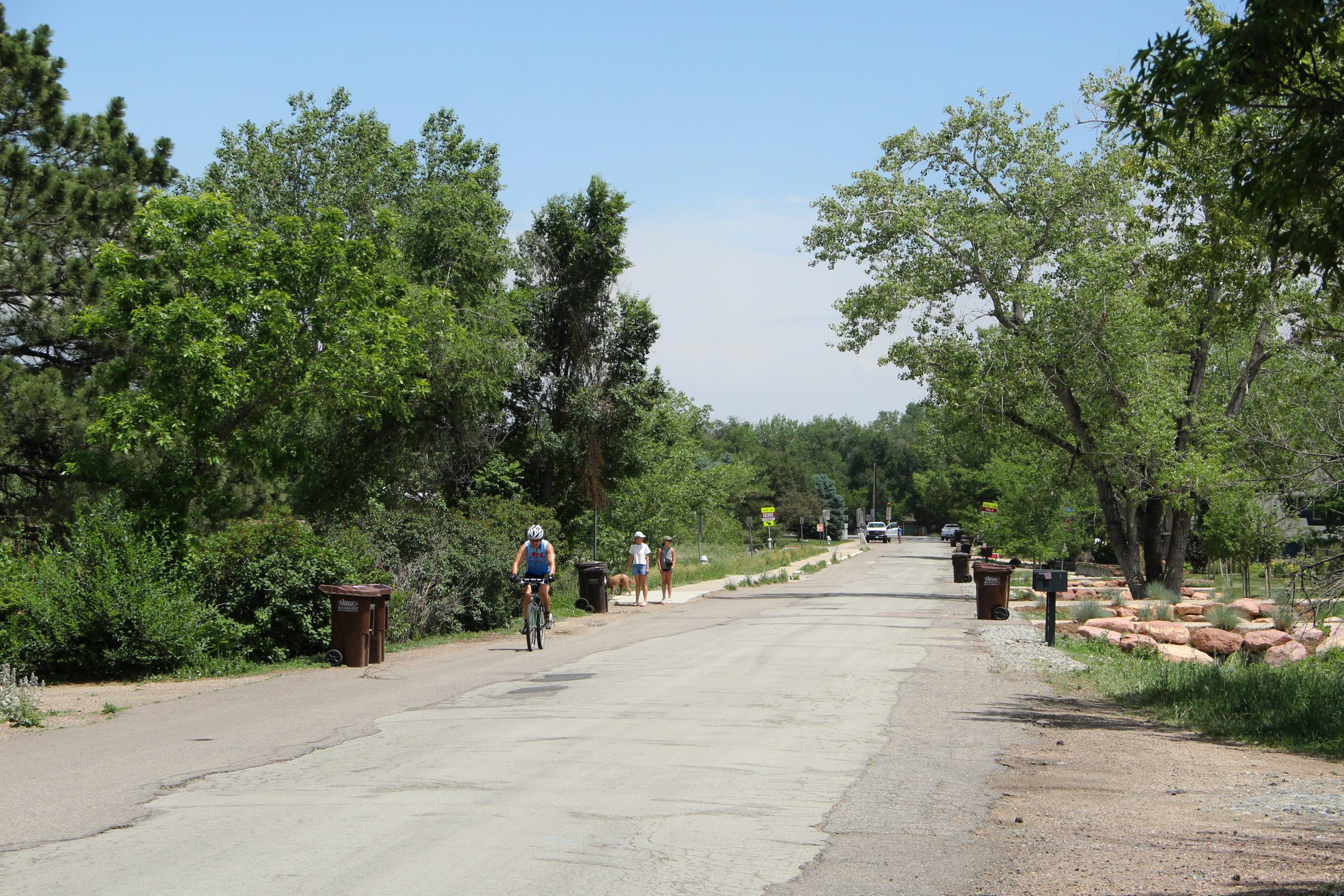
The residents of Sumac Avenue agree with the City of Boulder on one thing: Their street needs work. It hasn’t been paved in decades and is riddled with potholes. When the city proposed repairs in 2019, many welcomed the prospect of a smoother road.
Read more 🌽 Before Boulder was a foodie town, this market changed everything
That changed in 2025, when residents learned the city wanted them to help pay for the project — in many cases, tens of thousands of dollars. Resident John Kelly said his estimated assessment exceeded $100,000, though city projections now suggest the highest assessments could be closer to $90,000.
“Some of my neighbors have been here since the 70s and 80s, and they’re retired, and they’re scared to death,” Kelly said. “When they got that notice, they were crying.”
Resident Susanne Riis, who has lived on Sumac Avenue for 25 years, said she was told she would be required to contribute about $30,000 toward the project.
“I don’t have $30,000. I’d have to pull from my hard-earned savings to pay for it,” she said. “It feels like stealing money from us to do a project that they should be paying for.”
“Everybody doesn’t want it,” she added.
City staff have proposed creating a Local Improvement District to help fund the $8.4 million project, which would include pavement reconstruction, improved drainage, a new 8- to 10-foot-wide sidewalk, pedestrian crossings and curbs. Under the proposal, the city would collect $1.8 million from the owners of 52 homes along Sumac Avenue.
City spokesperson Aisha Ozaslan said that “during community engagement, the majority of participants supported the proposed project design and improvements.”
Residents counter that the feedback was collected before they learned they would be asked to help fund the project.
Several residents also said they never supported the scale of the proposal, which they view as unnecessary and out of character with the neighborhood.
“We definitely would like our street paved. It’s a mess,” Riis said. “But at the same time, no one [said] we want extra trees or we want a 10-foot sidewalk” on what she described as a more rural street.
City officials say the road has deteriorated beyond the point where simple repaving is feasible and requires a full reconstruction. Of the project’s $8.4 million cost, about $4.6 million is tied directly to rebuilding Sumac Avenue, while the remainder would pay for drainage, utility, Broadway and engineering improvements funded by the city.
Resident Adam Asnes said the project’s price felt especially difficult to justify given the city’s budget challenges.
“It’s a little weird,” he said. “One street is $8 million? Are you kidding me?”
The dispute now heads to city council, which must decide whether to create the local improvement district. A planned vote was recently postponed while staff conduct additional analysis.
A dispute rooted in decades-old agreements
When the area around Sumac was annexed into the city in the 1980s and 1990s, property owners signed agreements committing to help pay for future street improvements. Some also agreed not to “oppose or remonstrate against” the establishment of a Local Improvement District to fund them.
As properties changed hands over the decades, those obligations transferred to new owners. Some residents were unaware of the agreements when they purchased their homes, according to Riis.
Residents also argue the agreements are outdated.
According to a November 2025 city report on the project, Boulder had considered improvements to Sumac since the early 2000s but never pursued them because of staffing, funding and economic constraints.
When city staff revisited the issue in 2025, they initially sought individual agreements requiring property owners to cover 50% of transportation improvement costs. After several residents declined to sign, staff turned to a local improvement district instead.
Under Boulder city code, council may create local improvement districts to help fund public improvements that provide special benefits to nearby properties.
Read more Boulder Market Meals: Turn tangy sorrel into a classic French summer soup
Each property’s proposed assessment was calculated using a weighted formula based on lot size and road frontage.
A city consultant concluded that the project would provide $5.7 million in “special benefit” to adjacent properties through improvements such as drainage, safety, access and aesthetics. Under that analysis, property owners could be assessed up to $5.7 million, while the remaining costs would be attributed to the project’s broader public benefit, Ozaslan said.
Residents dispute that analysis, arguing the cited benefits are no different from those provided by street projects elsewhere in Boulder. They also argue that Sumac Avenue serves as a connector road between Wonderland Lake and Crest View Elementary School, making it a public asset used by the broader community rather than a street that primarily benefits adjacent property owners.
“They just redid all of 19th Street, really changed it radically — new sidewalks on both sides, new pavement, lower speed limit with speed bumps — and they didn’t charge the residents of 19th Street,” Asnes said.
“That’s what taxes are for,” Riis said. “Those are city services available to everyone. It shouldn’t be this special benefit to us, just because our property taxes are going to go up.”
City Councilmember Mark Wallach said that while city staff could still change his mind, he remains skeptical that the project provides a meaningful private benefit.
“To me it’s a public road, it’s going to be used by the public, and ought to be paid for, generally speaking, by public funds,” he said.
Concerns about a broader precedent
Asnes said city planners told residents the Sumac proposal could serve as a model for future local improvement districts.
“If they can do it here on Sumac, they can do it everywhere else they need to repave,” he said.
Nearby streets Tamarack Avenue and Upland Avenue were annexed under agreements similar to those governing Sumac.
Ozaslan said local improvement districts can “be formed in any location where public improvements specially benefit specific properties in order to enhance the city’s ability to provide public improvements.”
She did not directly address questions about whether other streets could face similar assessments.
What happens next?
Last fall,Sumac residents created a working group and asked council to pause the project, direct staff to reengage with the neighborhood and evaluate lower-cost alternatives.
Representatives of the group have met with Senior Transportation Planner John McFarlane, City Manager Nuria Rivera-Vandermyde and several councilmembers.
A November 2025 report projected permitting and finalization of funding agreements would be completed by the third quarter of 2026.
But after months of pushback, it’s unclear when the proposal will go to council.
On May 7, Rivera-Vandermyde canceled a request for council to hold a special meeting in early June on the creation of a Sumac Avenue Local Improvement District.
“Staff has determined we have some additional analysis to provide city council,” she wrote in an email.
Read more 📣 The first glimpse of Boulder’s 2026 council race
A new date for the discussion has not been announced.
Division of costs, according to the city:
