As Boulder Valley School District weighs closures, parents organize to save their schools
This story is part of a series, BVSD: The Enrollment Reckoning, examining how declining enrollment and shifting demographics are forcing the district to rethink the future of its schools.
Read more Boulder homeowners could be charged up to $90,000 each for a street project. Many are fighting back.
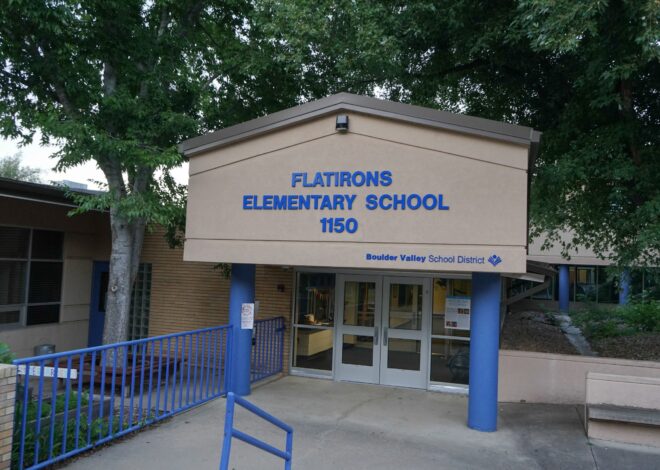
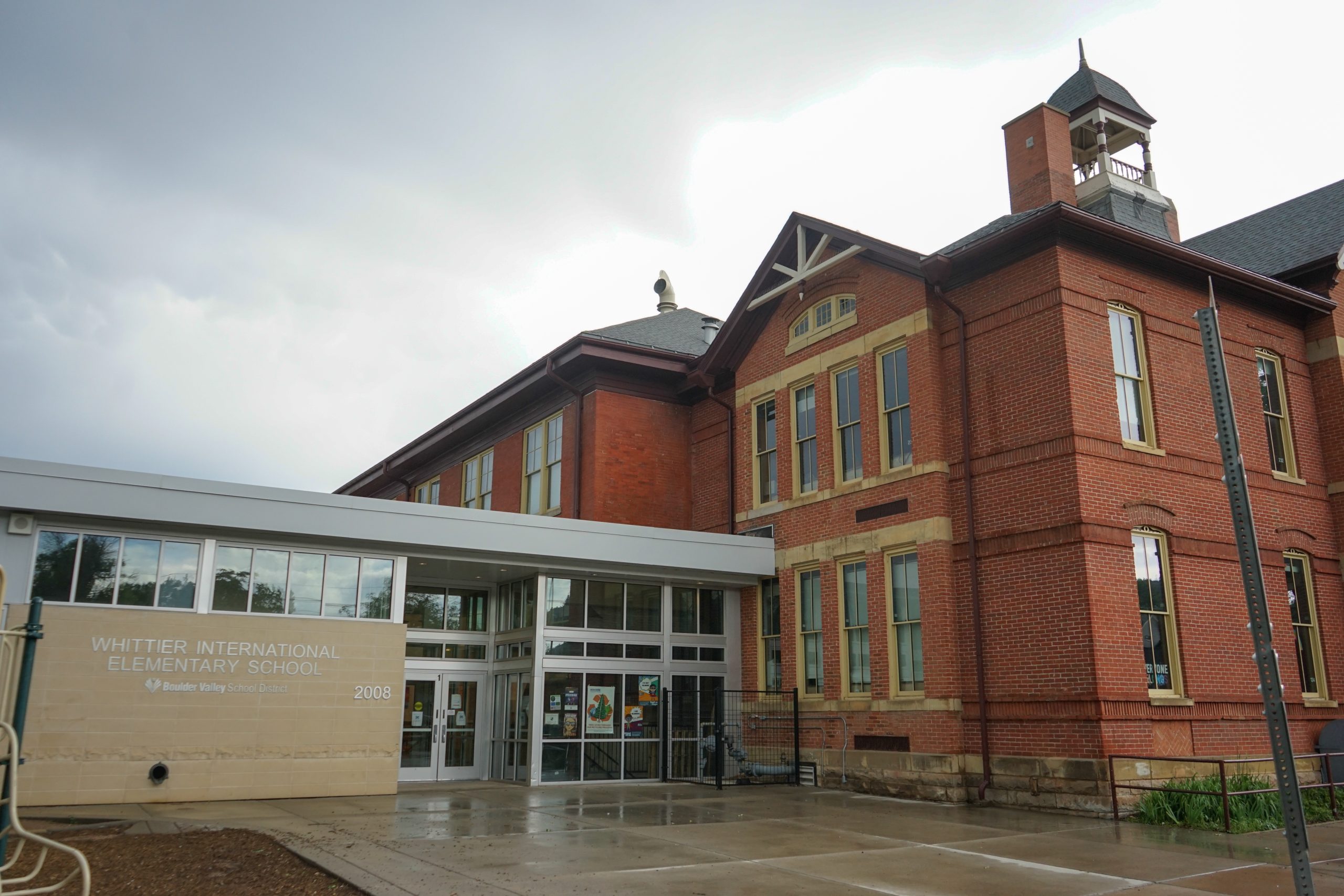
When Boulder Valley School District began discussing possible school closures and consolidations this spring, Cheryl McBay saw her role as Whittier Elementary PTA president differently.
Parents were looking for answers. Rumors were spreading. And for the first time, many families were confronting the possibility that schools they loved might not exist in their current form for much longer.
McBay learned about the shift during one of her principal’s regular coffee meetings and immediately felt the need to organize.
“I saw it as my task to quickly organize what are the facts,” she said. “I wanted a shared set of facts so there’s not just a rumor mill, and to understand the shared values and to strategize.”
She was hardly alone.
Across Boulder, parents formed advocacy groups, organized meetings, analyzed district data and surveyed families as they tried to understand what declining enrollment could mean for their schools and neighborhoods.
In the process, they highlighted one of the central tensions in Boulder’s school-closure debate.
Many parents are trying to demonstrate why their schools are uniquely valuable. District leaders, meanwhile, say the issue is not whether schools are good or bad, but whether the district can continue operating so many underenrolled buildings as student numbers decline.
District officials say community feedback has been central to the process and that, for now, any closures or consolidations would involve elementary schools only.
“Our goal is to hear from every voice in our community, not just the loudest,” said BVSD communications chief Randy Barber.
Still, many parents say the uncertainty pushed them into organizing.
The effort kept McBay up at night. Whittier is among the elementary schools facing enrollment and capacity pressure, and she wanted parents to be thoughtful and organized in communicating what they valued most about their school.
So she arranged a parent meeting to help families understand the process and discuss how to communicate Whittier’s strengths. Lucas Ketzer, Whittier’s principal, arranged childcare for the meeting as a show of support and fielded questions about enrollment and achievement data.
One thing that makes Whittier unique, she said, is the International Baccalaureate program, introduced in 2003, which helped reshape the school’s identity and attract international students. That identity has also shaped how some parents think about possible consolidation scenarios.
Some parents said that identity could make Whittier a logical destination in a consolidation scenario, though many emphasized that preserving the school’s culture and programming would be critical.
But it was still unclear exactly what kind of feedback the district was seeking.
District officials appeared less interested in hearing arguments for preserving specific schools than in understanding broader community values and priorities.
Parents take a data-driven approach
While Whittier parents focused heavily on school culture and program identity, another emerging parent group in South Boulder took a more data-driven approach.
South Boulder Advocacy, led by Mesa Elementary PTO president Sasha Schwartz, assembled detailed presentations comparing enrollment, survey and attendance data across schools in the area.
Mesa, like Whittier, is operating below capacity.
The group hoped the data would strengthen the case that Mesa should not be overlooked simply because nearby Creekside Elementary underwent a $22 million rebuild in 2017.
One parent with experience in corporate asset management helped analyze district data, while the group also surveyed more than 120 Mesa families about why they chose the school and what they valued most about it.
The survey found that 50% of respondents reported some form of special needs designation in their household.
Schwartz said the results reinforced what many families already believed: that Mesa had become an important support system for neurodivergent students and their families.
After presenting their findings during the school board’s public comment and sharing materials with board members, however, some parents left frustrated.
They felt the district did not view those distinctions as central to the closure discussion.
Read more 🌽 Before Boulder was a foodie town, this market changed everything
Board President Nicole Rajpal later told Boulder Reporting Lab the district does value school climate and performance data, but not as a determining factor in decisions about closures or consolidations.
“Our elementary schools are performing better than ever and we continue to hear how much our families and staff love their individual school communities,” Rajpal said in an email.
But, she added, those metrics are not driving the district’s declining enrollment process.
District officials argue that smaller schools have fewer resources and fewer opportunities for students, and that consolidating enrollment could ultimately strengthen educational offerings.
Schwartz, whose school enrolls about 230 students and is at 55% capacity, said her experience has been outstanding. She questions whether larger schools would necessarily improve student experiences.
“How are you going to make this better? I have an amazing experience right now,” she said.
Research on school consolidation has produced mixed findings. Studies generally show that students who transfer schools tend to see academic outcomes drop initially and then stabilize unless the new school significantly outperforms the original one.
It remains unclear whether differences among BVSD schools are substantial enough to produce gains that outweigh the disruption closures can create. Thus far, the district has refused to establish specific goals the community can refer to to gauge success.
The unanswered financial question
Beneath the debate over school identity lies another issue many parents say remains poorly defined: money.
While district officials have pointed to long-term enrollment declines, some families say they still do not understand what financial problem closures are intended to solve.
“Why is it urgent now? What is the deficit we’re trying to cover?” Schwartz said.
School finance experts and former district leaders say education budgets are rarely straightforward.
District finances shift because of changing enrollment, state policy, federal funding, inflation, grants and one-time expenses, making it difficult to isolate a single shortfall that closures would solve.
Heylene Jones, who was president of the BVSD school board in 2003 and voted to close Mapleton Elementary before later pushing to reopen it, said the experience taught her that school finance discussions are often more ambiguous than communities expect.
“We never were told an actual number then and you’re not going to get an actual number now,” she said.
Jones said current board members had not reached out to discuss her experience overseeing a school closure, but she would welcome the conversation.
For now, school board members have largely stayed on the sidelines while district staff develop recommendations. Rajpal said the board’s role will become more active once concrete proposals emerge.
Until then, many parents say they are trying to stay engaged in a process that could reshape their school communities.
McBay, from Whittier, said she still trusts the district’s process, but hopes leaders fully consider how Boulder and Colorado may continue changing in the years ahead before making irreversible decisions.
“My greatest hope in this entire process is that the district and planning board consider the past, present and future of Colorado before they officially close the public input process and begin the planning,” she said.
For anyone looking to share their own experience of this process, please email [email protected].
Read more Boulder Market Meals: Turn tangy sorrel into a classic French summer soup