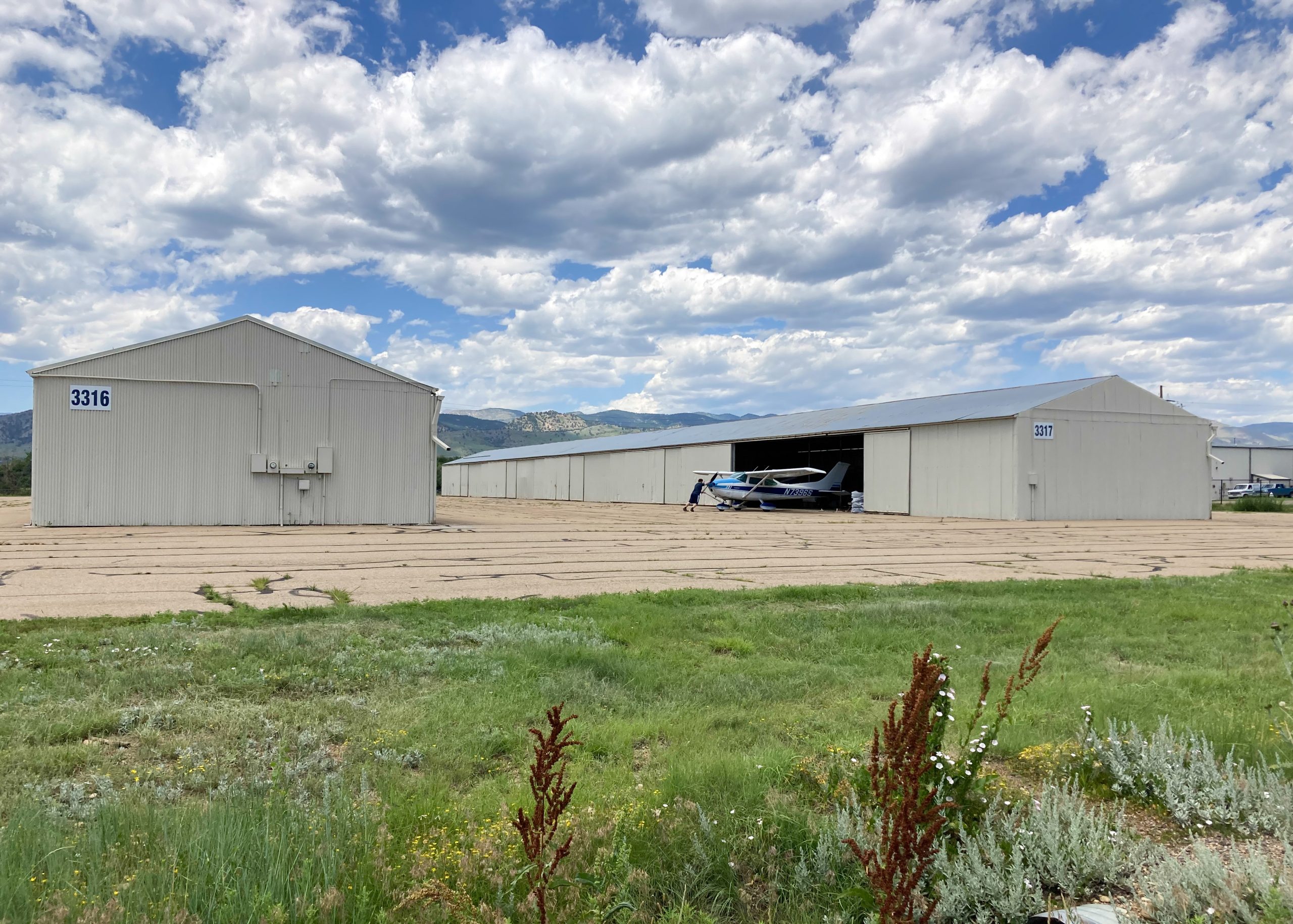
Boulder airport begins offering unleaded fuel, but not all planes can make the switch
Unleaded aviation fuel is now available at Boulder Municipal Airport. The change is a step toward addressing longstanding health concerns about lead pollution from piston-engine aircraft, though the city has not committed to a firm timeline for eliminating leaded fuel entirely.
Read more Boulder relocates homelessness services amid broader push to curb outdoor sleeping downtown
The unleaded fuel is available from a temporary skid-mounted tank parked east of the terminal building, an interim solution while the city plans to install permanent infrastructure.
A 2024 state law requires Boulder to submit a plan for phasing out leaded aviation fuel, with a target completion date of 2030, to remain eligible for state grant funding.
The new option will not replace leaded fuel for the airport’s entire fleet. UL94, the new unleaded fuel, works for about 70% of piston-engine aircraft, according to Andrew McKenna, president of Journeys Aviation, the airport’s fixed-base operator. Aircraft that require higher-octane fuel will continue using leaded avgas.
“This is the reason why leaded fuels have persisted,” McKenna said.
The airport will continue offering leaded fuel until an unleaded fuel compatible with the entire fleet becomes available.
Its unleaded avgas transition plan, last updated in April 2026, calls for converting to unleaded fuel by 2030, though the timeline depends on industry developments and federal mandates. The city is considering applying for a grant to install a 10,000-gallon, above-ground self-service tank, according to the plan.
The change comes as the airport’s long-term future remains the subject of debate. Some residents want to redevelop the land into housing, while others argue the airport is an important community asset for recreation, flight training and emergency response during natural disasters. The Boulder City Council plans to hold a public hearing on the airport July 23.
Another factor shaping the debate is lead pollution, which can cause permanent health impacts in children, including impaired cognitive function. Dozens of homes sit within half a mile of the airport, including the Vista Village and San Lazaro mobile home communities. Several studies, including a 2024 state analysis, have linked higher blood lead levels in children living downwind of airports with piston-engine activity. There is no safe level of lead exposure.
A lead contamination study specific to Boulder Municipal Airport has never been conducted.
Just how many planes will make the switch to unleaded fuel is unclear.
According to the city’s unleaded avgas transition plan, 187 aircraft are based at the airport. City officials expect about 100 of the airport’s 139 fixed-wing aircraft to be compatible with UL94. A full analysis of the airport’s UL94-compatible aircraft will be completed later, according to city spokesperson Aisha Ozaslan.
Read more A Boulder experiment in affordable downtown art space comes to an end
While a higher-octane unleaded fuel that could work with the entire fleet exists, it has not received certification from the American Society for Testing and Materials, making it commercially unavailable. McKenna said he expects 100R to be fully certified and available in Boulder within the next year.
The Soaring Society of Boulder, which uses piston-engine aircraft to tow its gliders, announced that it will begin using unleaded fuel immediately for its primary tow plane.
“We acquired the necessary certification for our primary tow plane years ago to make sure that we would be ready for it,” Zach Yamauchi, Soaring Society of Boulder’s vice president, said in a press release.
Because leaded fuel is cheaper, Colorado is using state grants to subsidize the price difference — up to $2 per gallon — as an incentive. On July 7, both leaded and unleaded full-service fuel cost $7.50 per gallon. To use unleaded fuel, aircraft also need an FAA supplemental type certificate. The city is offering a rent credit covering the roughly $103 cost of the certificate.
The transition to unleaded fuels is being driven by both state and federal policy, though neither has imposed a ban on leaded avgas.
In 2024, Colorado passed a law encouraging the transition to unleaded avgas, with $1.5 million earmarked annually for grants. Five airports — Boulder Municipal, Centennial, Erie Municipal, Longmont/Vance Brand and Rocky Mountain Metropolitan — were required to submit transition plans by Jan. 1, 2026 to qualify for state funding.
At the federal level, the Federal Aviation Administration and partners launched the Eliminate Aviation Gasoline Lead Emissions (EAGLE) initiative with a goal to eliminate leaded avgas for piston-engine planes by 2030.
Despite the installation of the new unleaded fuel tank, McKenna criticized the city’s pace of the transition. He said the aviation community has lobbied for years to install a second permanent tank, which he estimated would cost about $60,000.
Boulder is the third Colorado airport to begin offering unleaded avgas, following Centennial Airport in 2023 and Rocky Mountain Metropolitan Airport earlier this year.
Read more 🪨 Why did Boulder put a boulder in the middle of a bike route?