BVSD proposes closing four elementary schools in sweeping consolidation plan
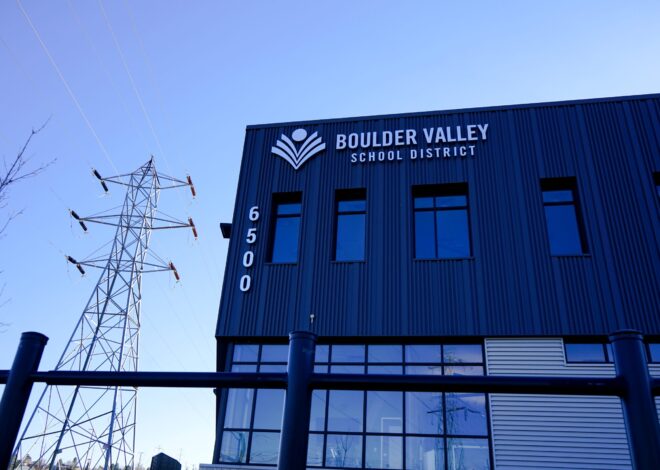
Boulder Valley School District unveiled its long-awaited plan for managing declining enrollment Tuesday, proposing a sweeping restructuring that would close four elementary schools, shutter four buildings and affect 16 schools through closures, mergers, relocations and grade changes.
Read more 🧀 Artisan cheesemaking returns to Boulder County at Dolly Mama’s
The changes reach beyond elementary students, with two PK-8 schools slated for reconfiguration. The Aug. 25 proposal does not redraw middle school attendance boundaries, though board members acknowledged that a broader boundary overhaul is likely in the coming years. Mountain schools would not be affected, and the district will continue evaluating its dual-language programs through next spring.
The changes would take effect in the 2027-28 school year if approved by the school board on Sept. 22, an outcome that appears likely given the support members voiced Tuesday.
The district’s stated goal is for schools to have at least three classes, or “rounds,” at each grade level. Under BVSD’s budget and staffing formulas, that threshold allows schools to receive a fuller complement of staff and resources. Smaller schools may have only a part-time counselor and share art, music and physical education teachers. They also receive less staffing for academic interventions, gifted and talented services and special education.
“This proposal today is not about failing schools,” Assistant Superintendent Rob Price said at the start of the meeting. As in the past, district officials said the focus should not be on school closures, but on improving students’ experience.
Broomfield: Close Birch and merge it with Kohl
Broomfield was the first region addressed in the presentation. It currently has four schools but is projected to have 431 empty seats by 2030. At that enrollment level, district officials said the region needs only three schools to maintain its target of at least three classes per grade level.
Aspen Creek has maintained stronger enrollment, bolstered by students who open-enroll there, while the region’s other three schools are operating well below capacity.
Under the proposal, Birch Elementary would close and merge with Kohl Elementary, about 1.6 miles away. Birch’s ICAN program would also move to Kohl. The two schools’ attendance areas would be combined and assigned to the Kohl building, which has capacity for 541 students. The merged school is expected to enroll about 473 students.
Price said the district considered several alternatives, including redrawing the Aspen Creek and Birch attendance boundaries, splitting Kohl and Birch into K-2 and 3-5 schools, and other consolidation scenarios.
Whether merged schools such as Birch and Kohl would retain one of their existing names or receive a new name remains under consideration.
Louisville: Make Monarch a middle school and Eldorado an elementary
Louisville and Superior currently have six elementary schools, three of which already have fewer than two classes per grade level. Based on projected enrollment, district officials said the region has roughly two more elementary schools than it will need. At the middle school level, all three schools serving the area are underenrolled.
Under the proposal, Monarch PK-8 would stop serving elementary grades and become a middle school, while Eldorado PK-8 would do the reverse, dropping its middle grades and becoming an elementary school. Attendance boundaries would also be redrawn, taking current open enrollment patterns into account.
The plan would keep both buildings open while consolidating students by grade level. Even after the changes, both schools are projected to remain under capacity, with roughly 30% to 35% of their seats unfilled.
The district considered several alternatives, including boundary changes alone; closing Eldorado, Superior or Coal Creek; and different configurations involving Monarch, Superior and Eldorado.
“The reason a lot of Eldorado parents are going to Monarch is because it’s closer,” Price said, pointing to the existing enrollment pattern that informed the plan.
District officials also highlighted potential benefits of turning Monarch into a middle school because it sits next to Monarch High School. They said the proximity could give middle school students access to higher-level courses and programs, improve coordination between middle and high school teachers, and create a connected secondary school community.
“That synergy is wonderful once it’s established,” Board President Nicole Rajpal said.
Boulder: Close Douglas, Mesa and Flatirons; relocate High Peaks and Community Montessori
For Boulder, Price said the planning was particularly complex because of the number of schools and the variety of programs offered. The district projects the area will have more than 2,500 empty elementary seats by 2030, equivalent to the capacity of roughly 10 schools.
The imbalance is also geographic. South Boulder has fewer students and more schools, while North Boulder has more students and fewer schools. As a result, Price said the district focused much of its consolidation plan on South Boulder, where several schools are projected to have too few students to sustain even two classes per grade.
The Boulder proposal has three main parts.
The first would close Douglass Elementary and divide its attendance area among Coal Creek, Eisenhower and Heatherwood. Douglass’ ICAN program would move to Heatherwood.
High Peaks, one of Boulder’s most in-demand schools, would move into the Douglass building, giving it room to grow. Community Montessori would then move into High Peaks’ current space at the Aurora 7 campus, where it would share the site with BCSIS. The Community Montessori building would close.
Board member Alex Medler raised concerns about whether Community Montessori and BCSIS would have enough students at the shared campus to sustain their distinct programming after High Peaks leaves.
The second change would merge Mesa and Bear Creek elementary schools and close the Mesa building. Mesa’s RISE program, an intensive learning center for students with autism, would move with its students to Bear Creek, which has enough capacity for the combined enrollment, projected at up to 462 students in 2030.
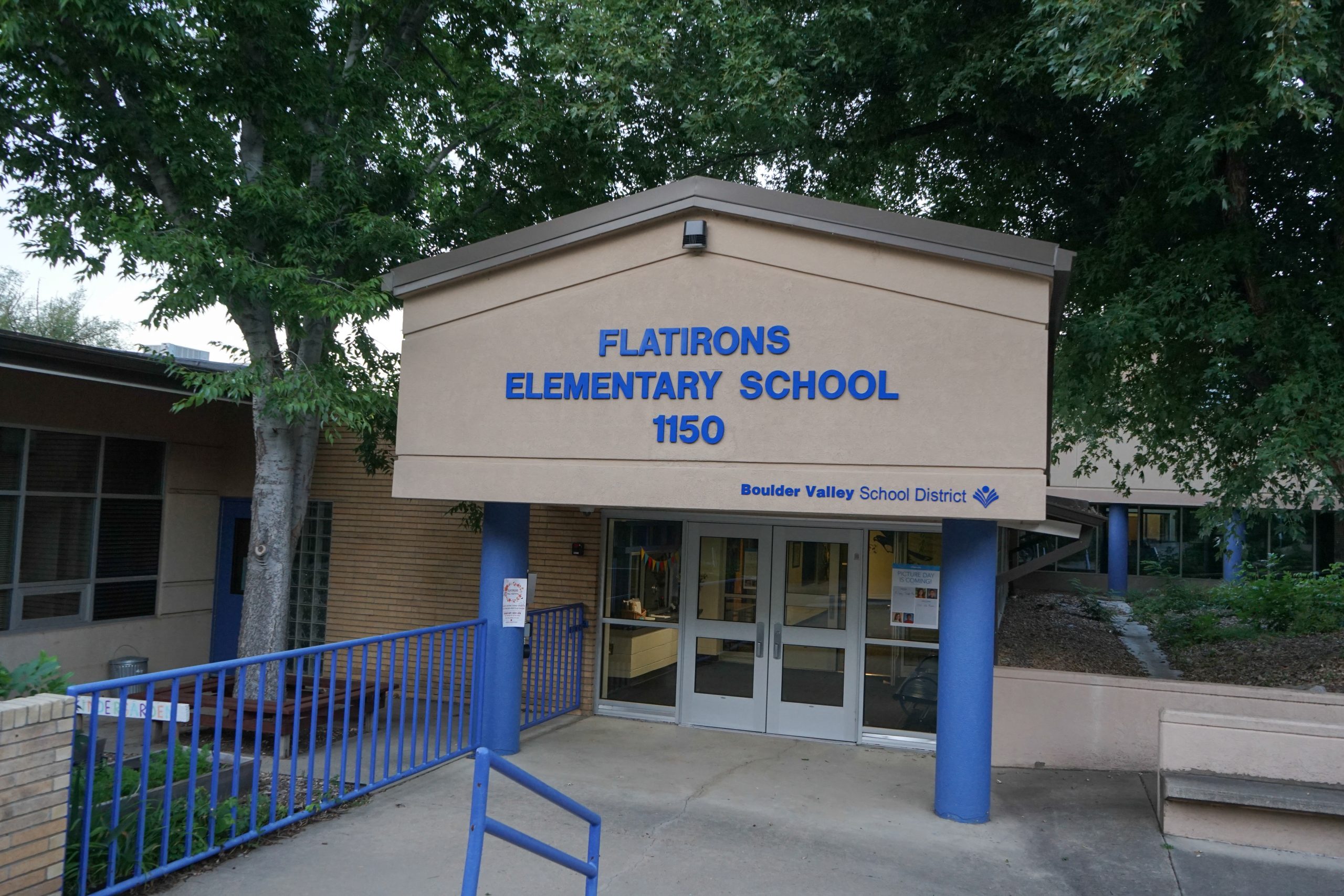
The third part of the Boulder proposal would close Flatirons Elementary and divide its attendance area between Foothill and Whittier. Flatirons’ RISE program would move to Whittier.
The district is also proposing to move Whittier’s start time from 7:50 a.m. to 8:35 a.m. to better accommodate transportation for mountain students.
Read more Boulder Market Meals: Turn locally grown eggplant into smoky baba ghanoush
Price said the district considered sending all Flatirons students to Whittier but determined the building was not well suited to absorb the entire school. Even under the proposed split, the receiving schools are projected to have between 15% and 30% of their seats empty in 2030.
Other scenarios considered included splitting Mesa and Bear Creek into K-2 and 3-5 schools; closing Creekside and distributing its students among four schools; co-locating Crest View with BCSIS; and closing Heatherwood and consolidating its students into Crest View.
Despite the scope of the proposed changes, they would make only a modest dent in Boulder’s excess capacity. The share of empty seats is projected to decline from 36.9% to 32.1%, a result that drew concern from board members.
“I know we’ll still have work to do after this,” Medler said. “I want to make sure the juice is worth the squeeze.”
Progress toward district goals
Taken together, the proposed changes would reduce the number of schools operating with fewer than two classes per grade from 14 to six, while increasing overall building utilization from 68% to 75%.
Six schools would still be projected to operate at relatively low enrollment, with roughly two classes per grade. It remains unclear whether those schools would receive the same staffing and resources as larger schools, but Superintendent Rob Anderson said the savings generated by consolidation would allow the district to better support them.
The district estimates the plan would free up $3.5 million to $4 million annually to reinvest in schools. The changes, however, would require significant upfront spending. Officials estimate facility modifications could cost as much as $10 million, only about half of which is currently budgeted for next year. The district said some of the remaining cost could be covered through savings on existing bond projects.
How families would be supported
Students affected by the changes would automatically be assigned to a new neighborhood school, but would receive priority in the open enrollment process if they prefer another option. Out-of-district students attending affected schools would also receive priority. The preference would apply for the 2027-28 school year only.
Existing transportation eligibility would remain in place for students who live more than 1.5 miles from their assigned school. The district also plans to provide transportation to all focus schools, including BCSIS and High Peaks, which currently lack district-provided transportation.
The district has not yet determined where preschool programs would be located but said those decisions will be announced before registration begins. School Age Care would be prioritized at schools receiving students through the consolidation, though the details have not been determined.
Medler said families attending focus schools that are being relocated should also receive priority if they would rather enroll in their neighborhood school than follow the program to its new location.
Families will have several opportunities to weigh in before the board makes a final decision. The district planned to send a letter to families Tuesday evening with instructions for submitting questions and feedback. Members of the public can also speak at upcoming board meetings on Sept. 8 and Sept. 22.
How staff would be supported
Open enrollment will run from Nov. 1 through Dec. 18, a timeline that will allow the district to make staff assignments about three weeks earlier than usual. Previous boards have discussed accelerating those decisions, and Rajpal said the earlier timeline would benefit employees by giving them more time to prepare for and settle into their new positions.
The district’s human resources team will visit each affected school to help staff navigate new placements and connect them with available resources. Principals will also meet regularly, work with transition coaches and create opportunities for teaching teams from merging schools to begin building relationships ahead of the changes.
Board member Alex Medler urged the community to be mindful of how the transition is presented to students, emphasizing the opportunities created by new school communities rather than the disruption involved in getting there.
“I’m really hoping the difficulty of this is not focused on the kids and transferred to them so that the hard parts get emphasized for them,” Medler said. “I’m really hoping we’re not exposing kids to more trauma and anxiety than we need to over the next year.”
Instead, he said, the community should focus on “celebrating the integration of our new school communities, and emphasizing the positive things that kids will experience because of this.”
Dual-language programs face further review
The district is postponing decisions about its dual-language programs, which officials said require a deeper review.
Officials acknowledged receiving limited feedback from Spanish-speaking families, including just 40 response packets from a Spanish-language townhall held at Columbine earlier this year. They also pointed to longstanding inconsistencies in student outcomes and programming, including uneven continuation of dual-language programs into middle school and the lack of an intentional pathway through high school. Currently, only about half of students who participate in dual-language programming ultimately earn the district’s Seal of Biliteracy.
The district proposed spending the fall reviewing its existing dual-language programs and conducting an internal analysis, followed by a broader process for gathering staff and family feedback in the spring.
“Maybe we’re not done creating efficiencies yet,” board member Deann Bucher said.
The changes would eliminate some of the district’s most significantly underenrolled schools and free up millions of dollars to reinvest elsewhere, but they would still leave six schools operating at roughly two classes per grade and thousands of empty seats across the district. Boulder, in particular, would retain nearly a third of its elementary capacity even after three facilities close.
“I think down the road, maybe not this year, but down the road, we’ll have to continue,” Rajpal said. “This board, future boards will have to continue to look at what makes sense for the City of Boulder.”
Read more 🏨 Boulder clears major hurdle for 110-room downtown hotel